Anatomy · Physiology · Research
Understanding neck pain and stiffness
Anatomical references, proposed mechanisms and analysis of scientific data.
On this page
Scientific dossier · Separate reading of practical advice
Functional and biomechanical anatomy
Cervical mobility combines the high joints between occiput, atlas and axis, then the underlying segments with their discs and posterior joints. The eyes, balance and chest movements are involved in the gestures of the head. Cervical roots and nerves of the upper limb require a local pain to be distinguished from a picture with neurological signs. A reduced rotation alone does not mean a responsible joint.
Physiology and mechanisms of symptoms
Protective contraction and sensitivity can limit movement without permanent mechanical obstacles. Pain can be influenced by a prolonged task, effort or previous episode. Conversely, a posture observed in a photo does not measure cumulative exposure or the ability to tolerate it. The cracks don't prove that a vertebrae is replacing itself.
Clinical reasoning and guidance
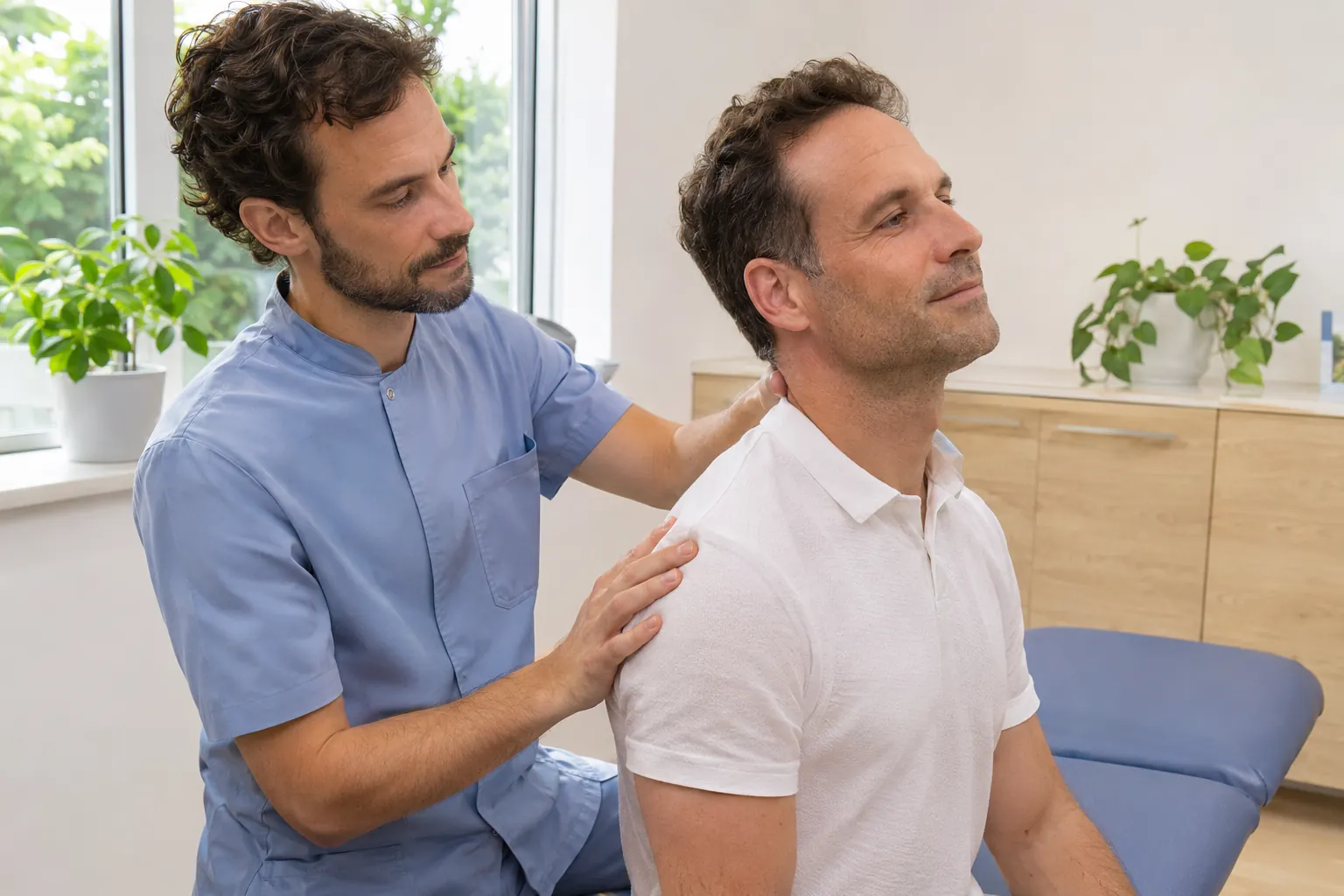
The assessment combines the description of the discomfort, active mobility and the search for elements justifying a medical opinion. Strength, sensitivity, dexterity and walking become important if the context evokes neurological damage. After trauma or unusual vascular or neurological symptoms, no further attempt should be made to cause signs through repeated tests or manipulation.

Scientific data and recommendations
APTA/JOSPT recommendations organize management according to clinical presentations and integrate exercise, education and manual interventions in certain situations. Their scope is that of a body of musculoskeletal care: they do not validate an explanation of misalignment or the superiority of an osteopathic school.
What the results do not support
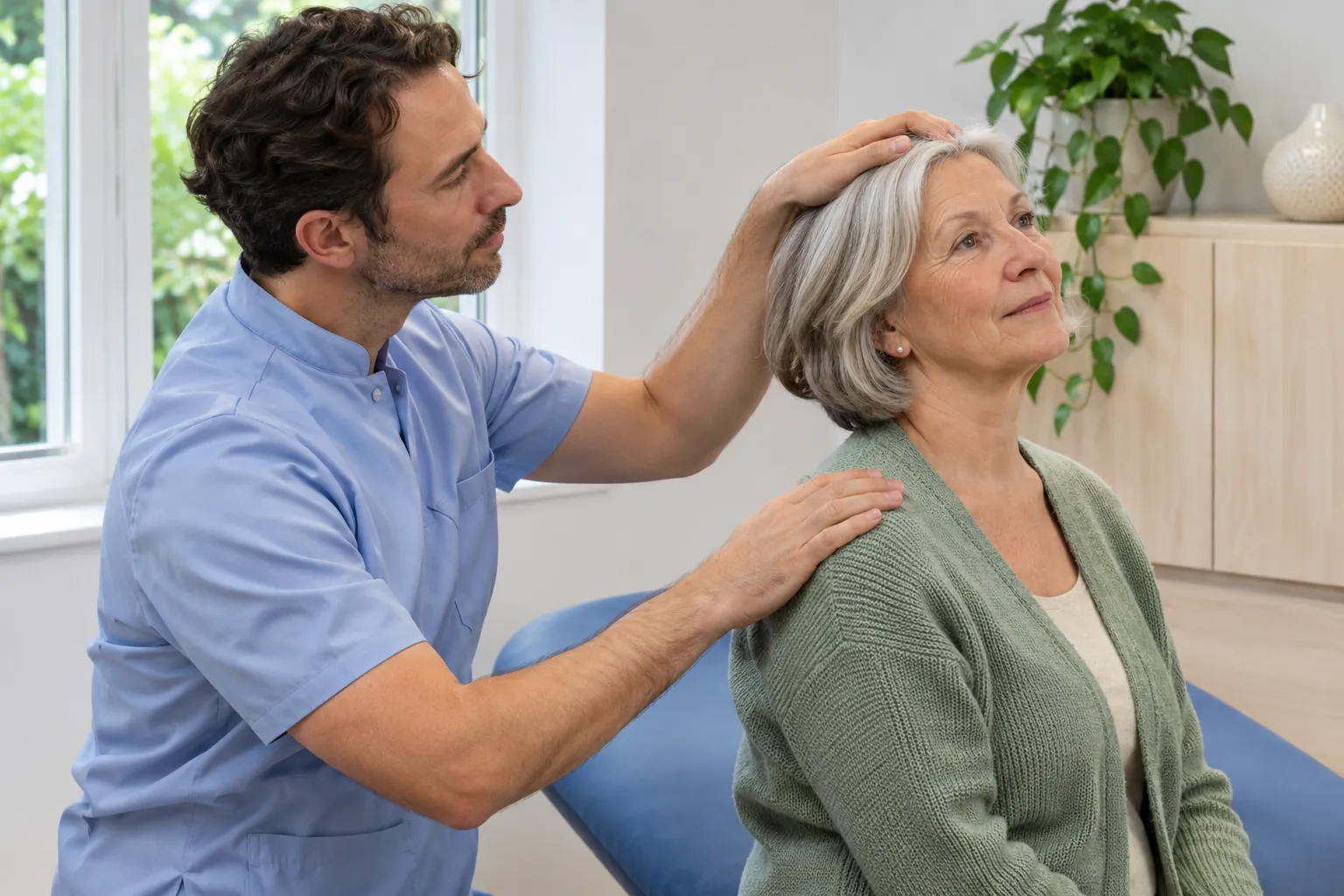
Neck data should not be extended to the treatment of migraine, dizziness or neurological disease. Techniques differ in speed, amplitude and population studied, so the potential benefits and safety are not interchangeable. One technique can be refused and another strategy discussed.
Functional monitoring and coordination of care
The result is judged in particular on turning the head without apprehension, reading, working or sleeping with less discomfort. Raising a few degrees immediately is not the only goal. A progressive irradiation, weakness or functional loss requires a medical reassessment rather than an automatic intensification of manual care.
Scope of this file
- Population and situation
- Cervicalgia: painful or stiff neck. The results must be interpreted for this specific situation.
- Choice of care
- APTA/JOSPT recommendations organize management according to clinical presentations and integrate exercise, education and manual interventions in certain situations.
- Security priority
- After trauma, or in the presence of weakness, walking disorders, sudden headache or fever with marked stiffness, ask for a quick assessment.
Segmental mobility and reasoning
The rotation of the head combines several joint stages and coordinated muscle contributions. A reduced amplitude does not, in isolation, identify a vertebra to be corrected. Measures change with pain, confidence and direction. It is necessary to distinguish an apparent mechanical limitation, root pain and signs suggesting a condition that comes out of the field of manual care. The tests are interpreted in a beam, not as a single evidence.
Study population and choice of technique
The recommendations on neck distinguish several clinical tables. A technique proposed in a program combining exercise and information is not validated as a universal solution. Potential benefits must be balanced against risks, preferences and alternatives. The results of a gentle mobilization study cannot be attributed to all cervical manipulations; gestures, populations and comparators must be described precisely.
Bibliography and original documents
Editorial and documentary review: November 5, 2026. The references describe their scope; they are not valid for all osteopathic practices.