Anatomy · Physiology · Research
Understanding work-related musculoskeletal pain
Anatomical references, proposed mechanisms and analysis of scientific data.
On this page
Scientific dossier · Separate reading of practical advice
Functional and biomechanical anatomy
Work-related musculoskeletal disorders involve a variety of tissues and activities. Efforts, repetition, maintained positions and recovery alter exposure. Equipment is only one component: cadence, room for manoeuvre and organization also determine the possibility of varying gestures.
Physiology and mechanisms of symptoms
Pain may begin during a task and then persist after it. Psychosocial factors can modulate symptoms without making the pain imaginary. An analysis of the position must consider the actual activities and their succession, rather than a photograph of a posture deemed to be bad.
Clinical reasoning and guidance
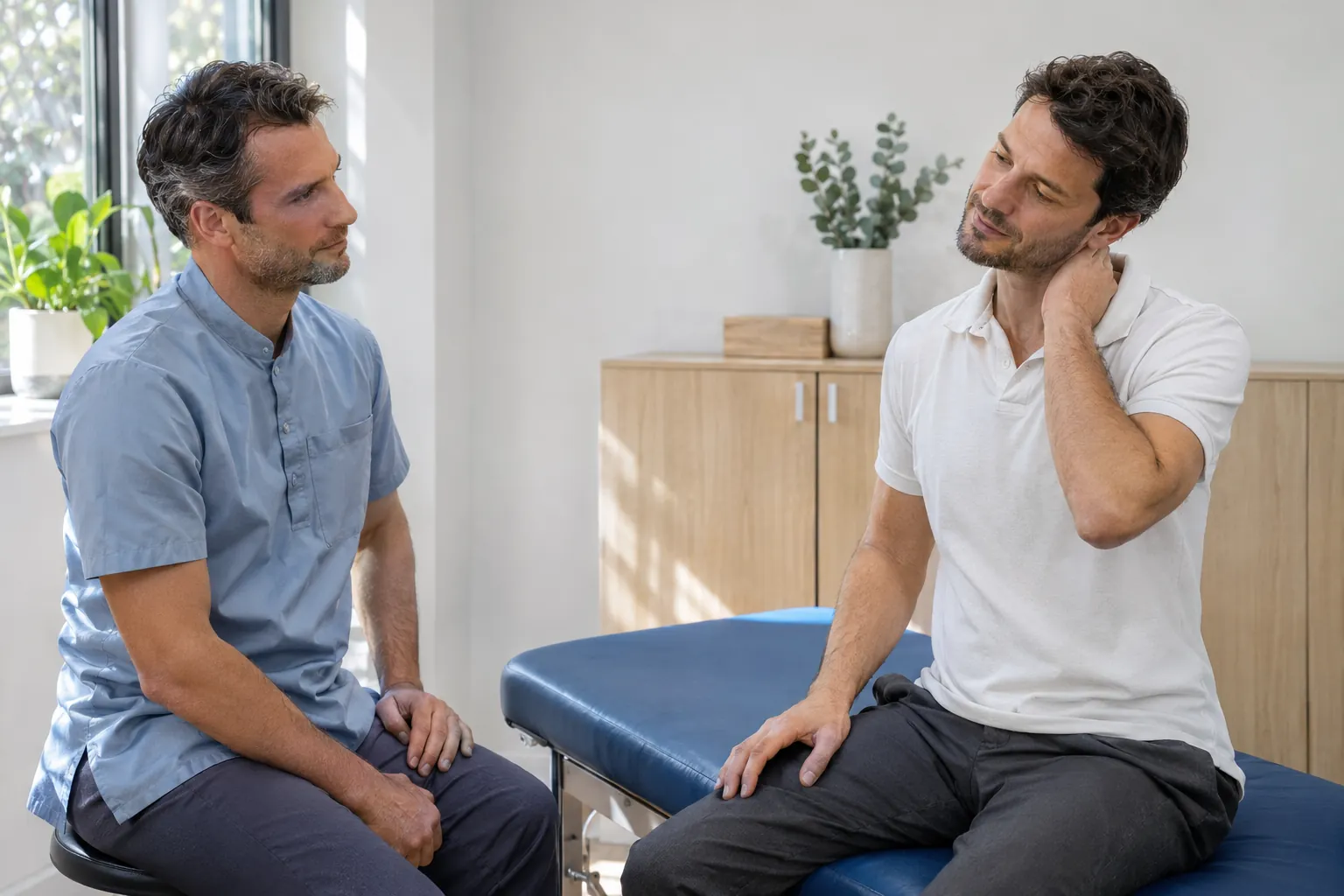
The balance sheet shall specify the tasks, periods of the day, loads, breaks and possible neurological symptoms. Occupational medicine can intervene on adaptations and retention in employment. An accident at work or aggravation with loss of strength follows a specific medical path, not only an ergonomic adjustment.
Scientific data and recommendations
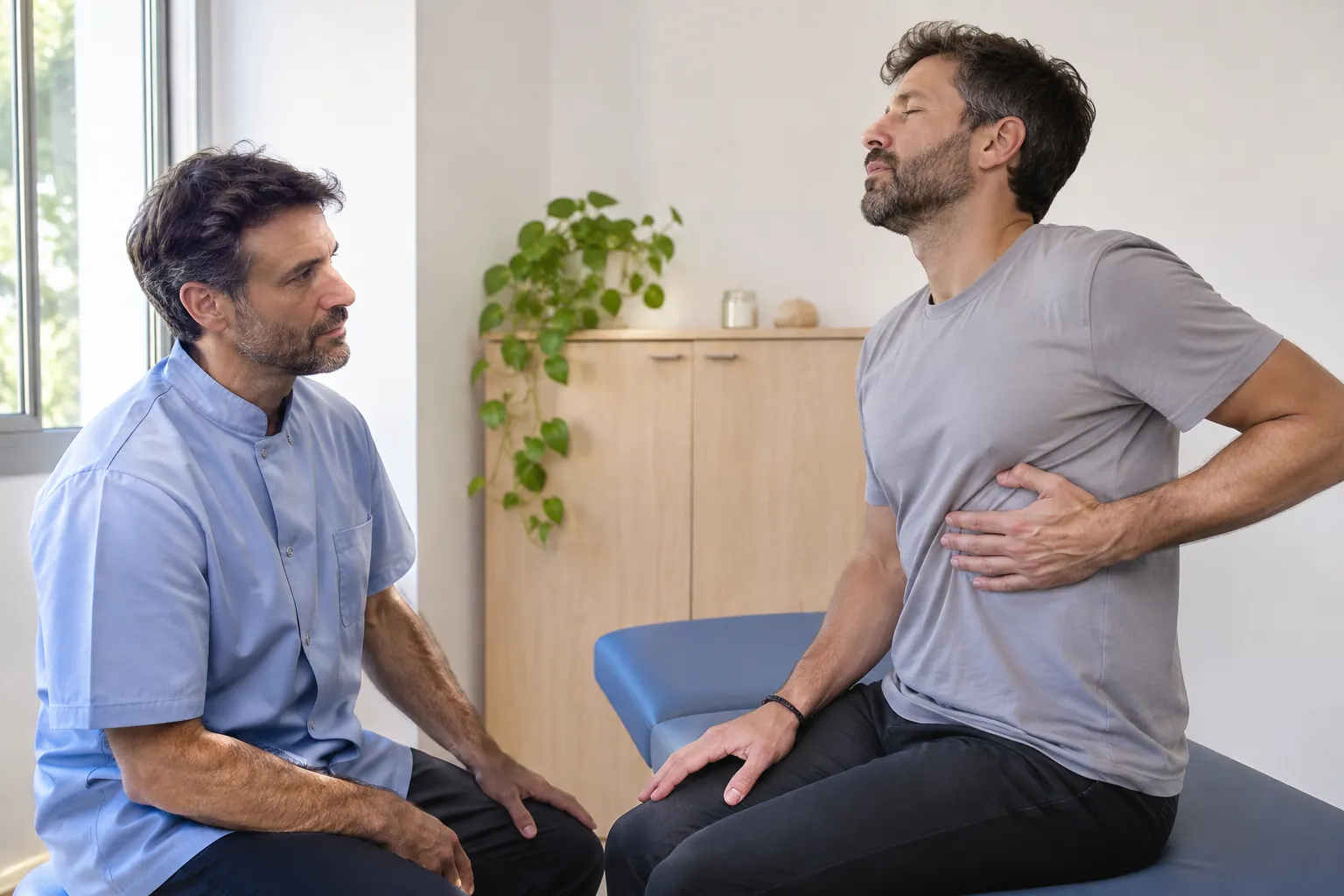
The INRS promotes prevention involving planning, equipment and organisation. These recommendations do not prove that manual therapy compensates for excessive exposure. Individual intervention can help to discuss comfort, but collective constraints require an approach at work level.

What the results do not support
Relief during a stopover or after a session is not enough to attribute all pain to a position defect. Conversely, asking only the employee to stand straight can leave intact the main determinant. Solutions must be evaluated under realistic working conditions.
Functional monitoring and coordination of care
The follow-up includes task tolerance, number of interruptions, recovery and ability to hold the position. A change at the same time facilitates interpretation. The objective is a sustainable organisation, not a dependence on repeated care to withstand a constraint that remains unchanged.
Scope of this file
- Population and situation
- Pains at work: understand the constraints. The results must be interpreted for this specific situation.
- Choice of care
- The INRS promotes prevention involving planning, equipment and organisation.
- Security priority
- Loss of strength, persistent tingling or increasing night pain require medical advice. An occupational accident must follow the appropriate medical and administrative path.
Exhibition and organization combine
Repeated work combines physical constraints, duration, recovery possibilities and organizational factors. A posture is not good or bad regardless of the time spent and the variability available. Ergonomic data from INRS focus on equipment and work organisation. Care should therefore not place full responsibility on the person or present manual care such as correction of a poorly designed position.
How to assess adaptation
The effect of a change follows on a defined task, its duration tolerated and recovery, taking into account other changes in the work. An improvement can come from several combined actions; it does not demonstrate a single mechanical mechanism. Persistent symptoms or occupational limitations warrant coordination with relevant professionals, including occupational medicine. Possible care remains a component, not an isolated solution to exposure.
Bibliography and original documents
Editorial and documentary review: November 5, 2026. The references describe their scope; they are not valid for all osteopathic practices.