Anatomy · Physiology · Research
Osteopathy for children: anatomy and sources
Anatomical references, proposed mechanisms and analysis of scientific data.
On this page
Scientific deepening · child
Growing locomotor system
Growth cartilages and tendinous insertion zones have peculiarities that alter the reasoning after trauma or sports overload. Pain attributed to normal growth may mask another condition. Age, maturation, recent activity and ability to walk or play provide essential information before discussing manual care.
Posture, coordination and variability
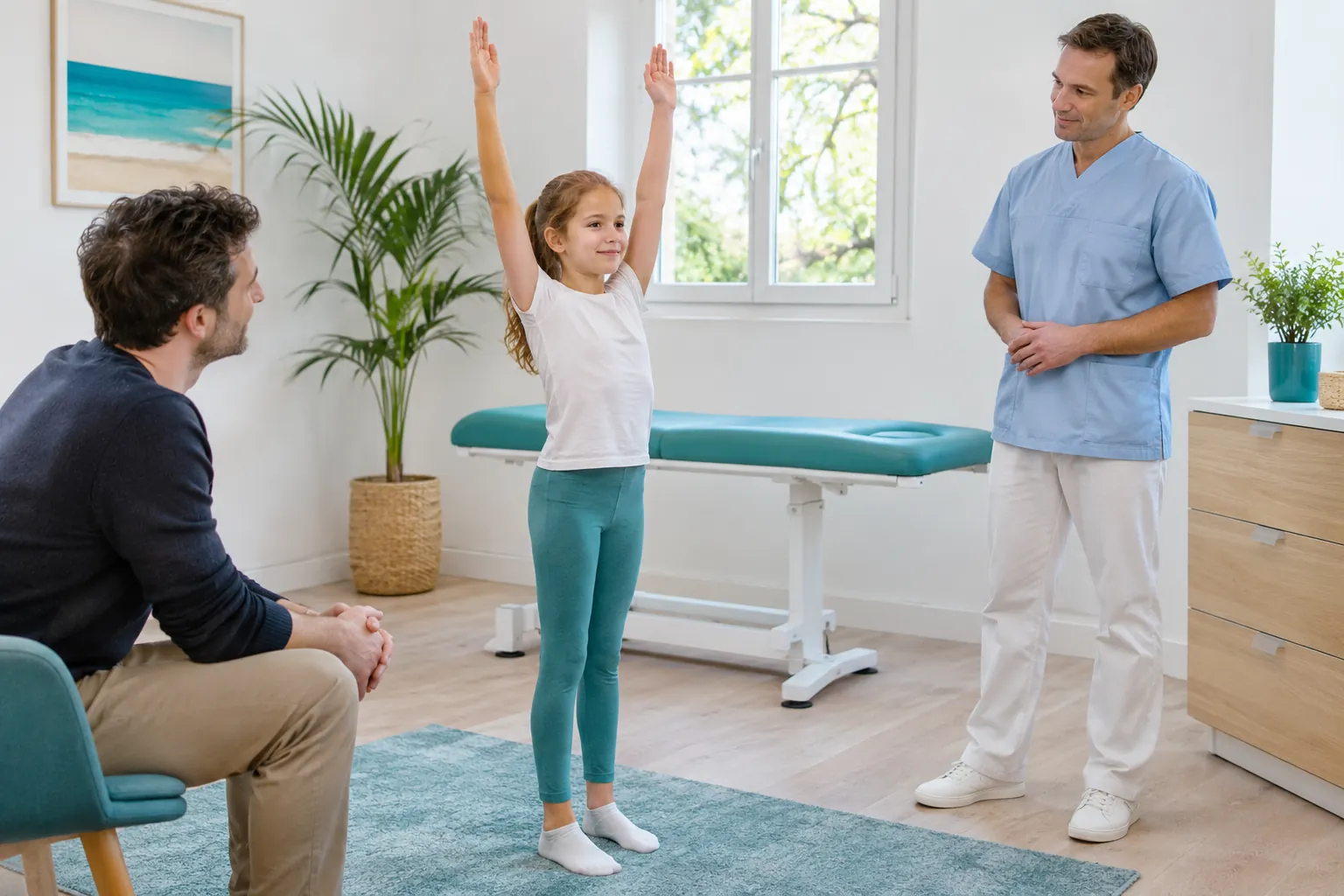
Engine control develops with experience, sensory capabilities and movement opportunities. A variation in posture or asymmetry alone does not constitute a disease. Activities, fatigue and the environment influence observed behaviour. The objective is not to impose a single postural model, but to understand a real difficulty and its impact on the child's life.
Pain and involvement of the child
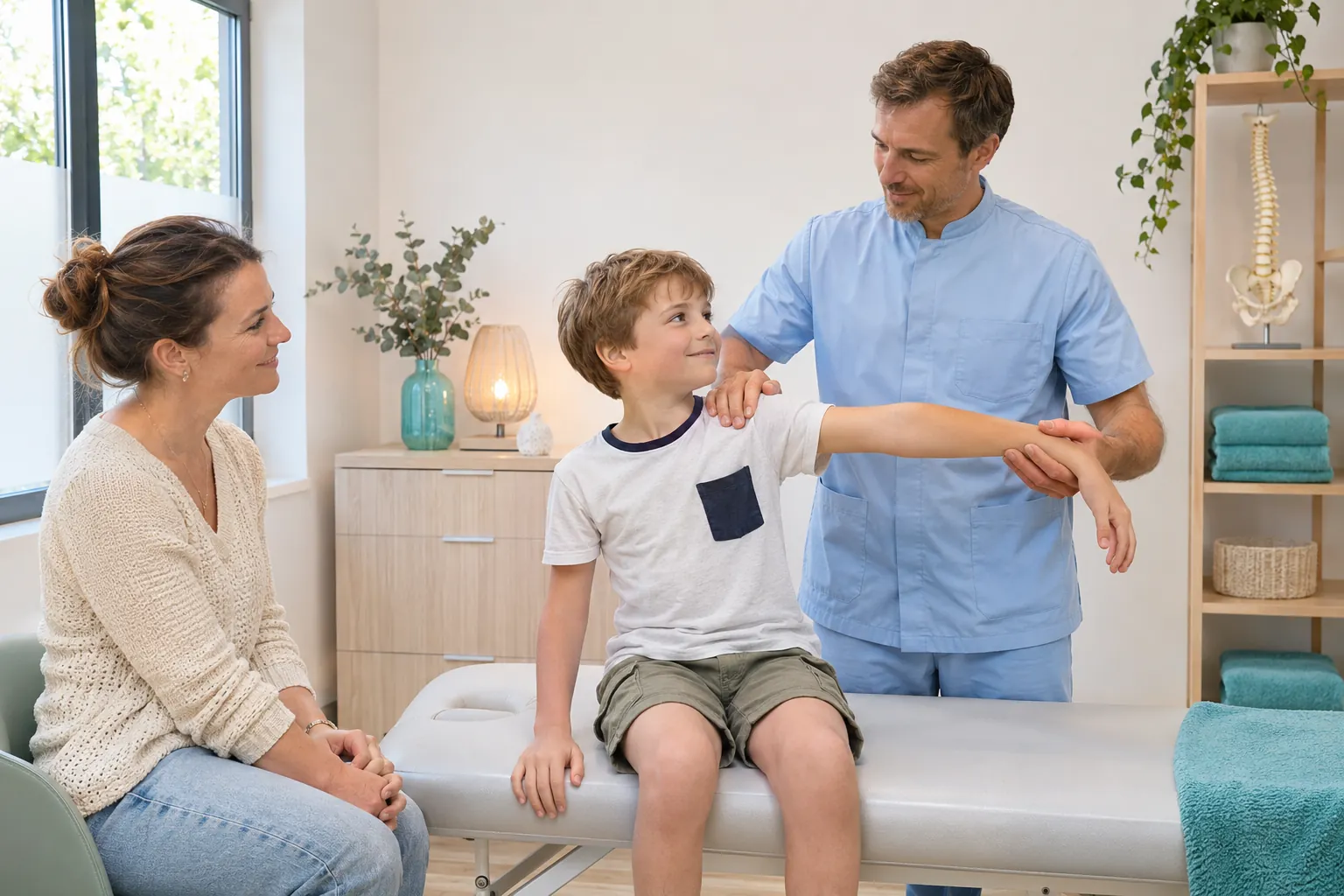
The description of pain depends on age, language and context. The story of the child and that of the parents may be complementary. Avoided games, school attendance, sleep and sport help to appreciate the impact. The examination must be explained in appropriate language and the child must be able to report an discomfort or request a stoppage.
What research makes it possible to assert
The results of trials in adults are not sufficient to conclude in children. The population, technique and diagnosis must correspond to the question asked. Manual approaches cannot be described as an established treatment of attention, learning or neurodevelopment disorders. The existence of paediatric training alone does not constitute proof of effectiveness for these indications.

Sorting and coordination
A lameness, swelling, persistent night pain, fever or a decline in acquisitions warrant a medical assessment. School difficulties may require assessments of hearing, vision, language or other functions according to the table. Coordination avoids reducing complex difficulties to supposed cranial tension.
Measuring a relevant result
Possible support must be linked to an identified discomfort: resuming a game, supporting an activity or finding a gesture. The child's feelings and consent remain at the centre of the exchange. If the evolution is not satisfactory, the project will be reviewed. Repeating preventive sessions on an asymptomatic child should not be presented as a general necessity.
Growth and causation: avoid shortcuts
A difference in amplitude, an observed posture or the presence of a more turned foot does not alone establish the cause of pain. Growth is accompanied by individual variations and the context of sport or fatigue changes performance. Interpretation must cross history, examination and impact. Attributing school difficulty, attention disorder or chronic illness to mechanical blockage exceeds what the data suggest.
Results adapted to the child's life
Resumption of play, walking or sport, sleep disturbed by pain and school absences are more relevant benchmarks than an announced palpatory correction. They should be reported with the child and his/her parents, taking into account his/her age. A lasting change in the gait, unusual night pain or regression are not just a functional discomfort and may impose another balance.
Place of coordination
The recommendations on the identification of neurodevelopment concern the identification and orientation of children at risk; they do not recommend osteopathy to correct a neurodevelopmental disorder. The physician, physiotherapist and other stakeholders choose their tools depending on the situation. A possible osteopathic consultation should not delay these steps or cause an established management to be interrupted.
Bibliography and original documents
- Posadzki et al., 2022 — Paediatric data See original source
- Royal Childrens Hospital — child who can check out the original source
- Read the original publication or recommendation
- HAS · Identification and orientation of neurodevelopmental disorders
Documentary review: November 5, 2026. Publications are interpreted according to their population, method and limitations.