Anatomy · Physiology · Research
Osteopathy for babies and children: a closer look
Anatomical references, proposed mechanisms and analysis of scientific data.
On this page
Scientific deepening · infant child
Growth and motivating organization
The infant is not a small adult. Proportions, postural control capabilities and interactions are changing rapidly. Acquisitions are read in a global trajectory, with individual variations; they should not be evaluated solely from an isolated date of appearance or from a posture observed in consultation. In a child born prematurely, medical follow-up takes into account the corrected age when appropriate.
Cranial anatomy: growth rather than correction model
The bones, sutures and fontanelles contribute to the cranial expansion. Support preference and mobility limitation can contribute to positional deformation. The clinical issue is to distinguish frequent situations from atypical forms and to preserve safety. It cannot be inferred from a flattening that a compression of birth would cause digestive disorders, sleep or learning.
Power, breath and comfort: systems not to be confused
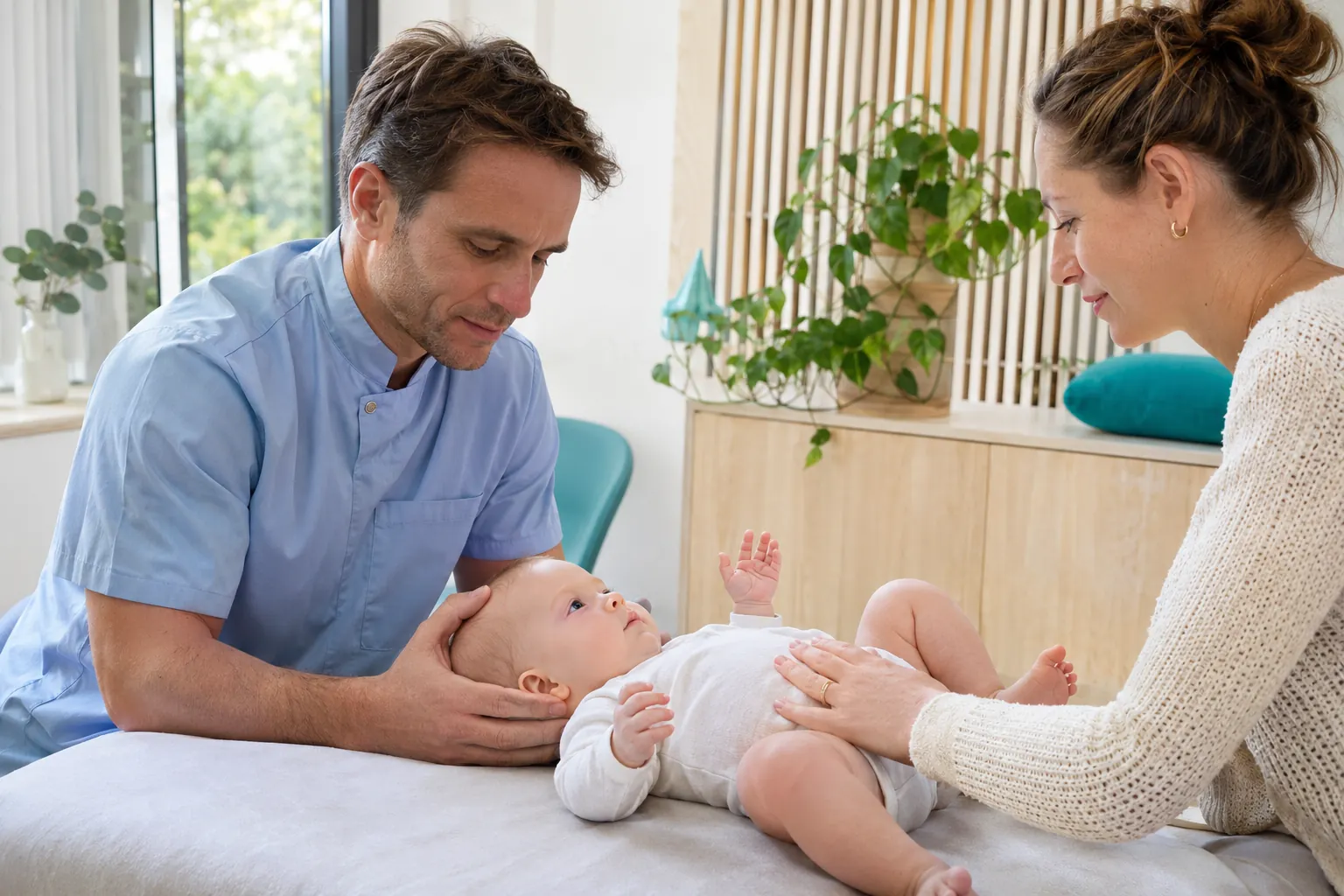
Sucking, swallowing and breathing require complex coordination. Feeding difficulties may have medical causes and consequences: growth needs monitoring, and pain, fatigue or breathing problems need assessing. A single mechanical explanation must not delay paediatric assessment or breastfeeding support when relevant. A baby becoming calmer after gentle contact does not demonstrate that reflux has been treated.

Clinical data and confidence level
The 2024 craniosacre systematic review does not support a convincing benefit for the paediatric indications studied. These results must be distinguished from free and secure sleep advice, which is based on another prevention framework. The variety of protocols, small numbers and criteria reported by parents limit the certainty of many trials. A programme offered to all newborns without identified problems is not justified by these data.
Evaluate without delaying guidance
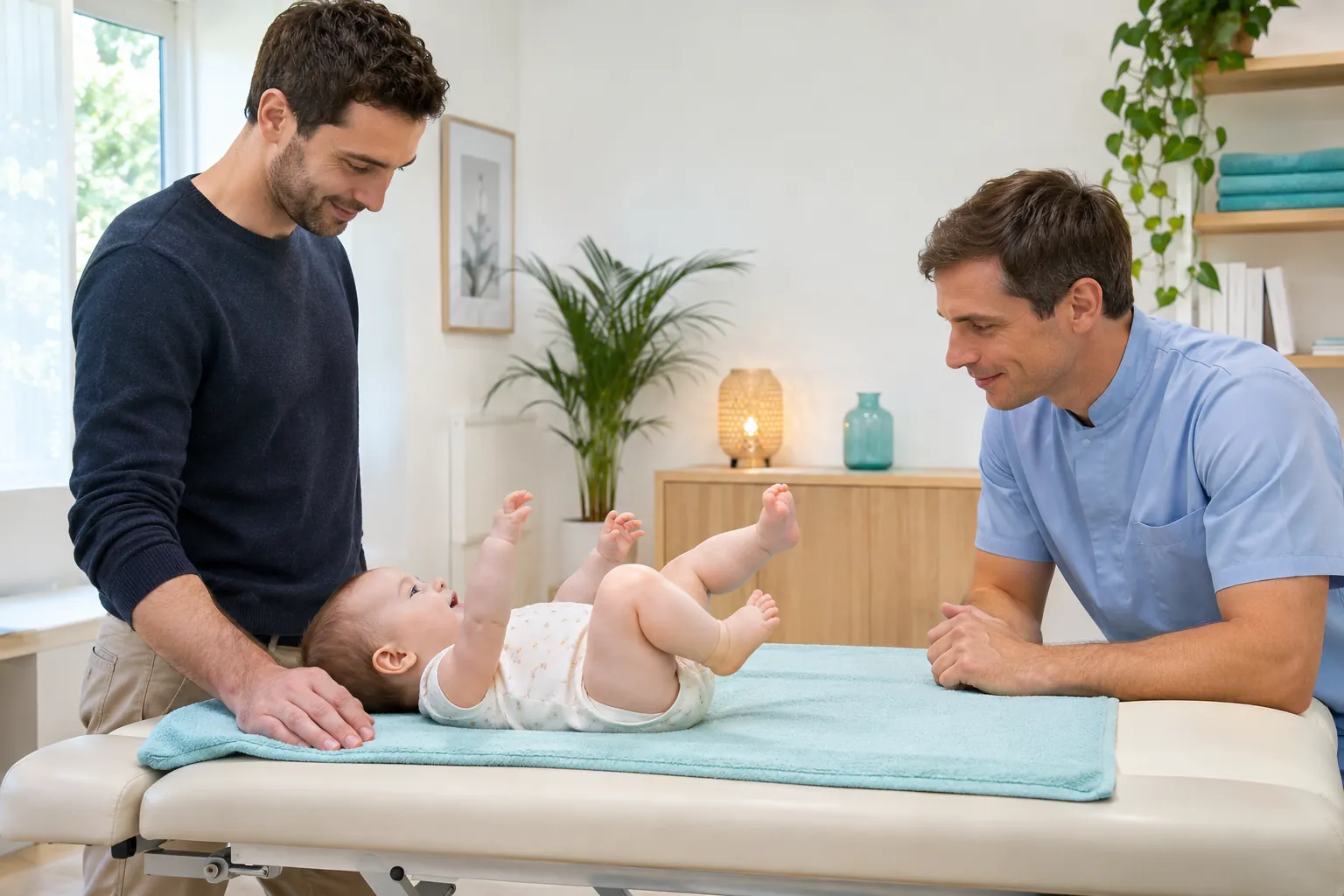
The health book, birth history and parental observations help to organize the exchange. Any development regression or concern should be considered and directed to the physician. HAS recommends global identification and early intervention when the profile requires it. Osteopathic consultation can be integrated into the course; it is not a diagnostic test of neurodevelopmental disorders.
What can be followed up usefully
The observations relate to spontaneous movements, interactions and a precisely described discomfort. An evolution must be placed in natural growth and other interventions received. Objectives are discussed with parents and caregivers. Sleep on the flat back remains the rule; the times on the belly concern only the monitored awakening. No head restraint or parental manipulation should be proposed to reproduce a session.
Distinguish spontaneous maturation and care effect
In infants, sleep rhythms, crying and eating change rapidly. An episode can improve after a consultation without the care being the cause. Paediatric studies should therefore take into account age, spontaneous evolution, other aids received and how parents assess symptoms. The chosen criterion counts: reported crying reduction, growth, parental comfort and medical diagnosis are not interchangeable.
Do not extrapolate from one indication to another
Research into tears does not allow us to conclude on reflux, breastfeeding difficulty, motor development or skull deformation. Small numbers, risk of bias and lack of follow-up often limit confidence. For each situation, the benefit/risk balance should include the indirect risk of delaying paediatric management or dietary support. No supposed benefit justifies a forced act or a promise of global prevention.
Organization of follow-up and concrete criteria
Parental observations on food intakes, wet diapers, responsiveness and movements are useful to the post-child professional. The weight and the cranial perimeter are interpreted on curves and over time. Parental concern, loss of learning or persistent asymmetry may justify an assessment of development. The quality of the support is also judged on the relevance and speed of this orientation, not on the number of sessions proposed.
Bibliography and original documents
- Systematic Review 2022 Status of Evidence on Pediatric Osteopathic Treatments — PubMed. 的
- Colics of the Infant Cochrane Review on manual therapies. 的
- Plagiocephaly and sleep Recommendations of the High Health Authority. 的
- Torticolis congenital Clinical guide to the Royal Children's Hospital in Melbourne. 的
- Infant Reflux Clinical Recommendations NICE. 的
- Read the original publication or recommendation
- HAS · Identification and orientation of neurodevelopmental disorders
Documentary review: November 5, 2026. Publications are interpreted according to their population, method and limitations.