Understanding · Choosing · Acting
Ankle and foot: walking more comfortably
A pain hinders the first steps, the support or the resumption of sport?

On this page
What you can observe
Foot pain may affect the bone, tendons, joints or plantar tissue. After twisting, the importance of swelling alone does not make it possible to distinguish a sprain from a fracture.
The first landmarks in everyday life
After an injury, have the need for examinations assessed. For progressive pain, note variations in shoes, terrain and volume of activity. Avoid repetitive testing of very painful support.
Clarifying a recent trauma
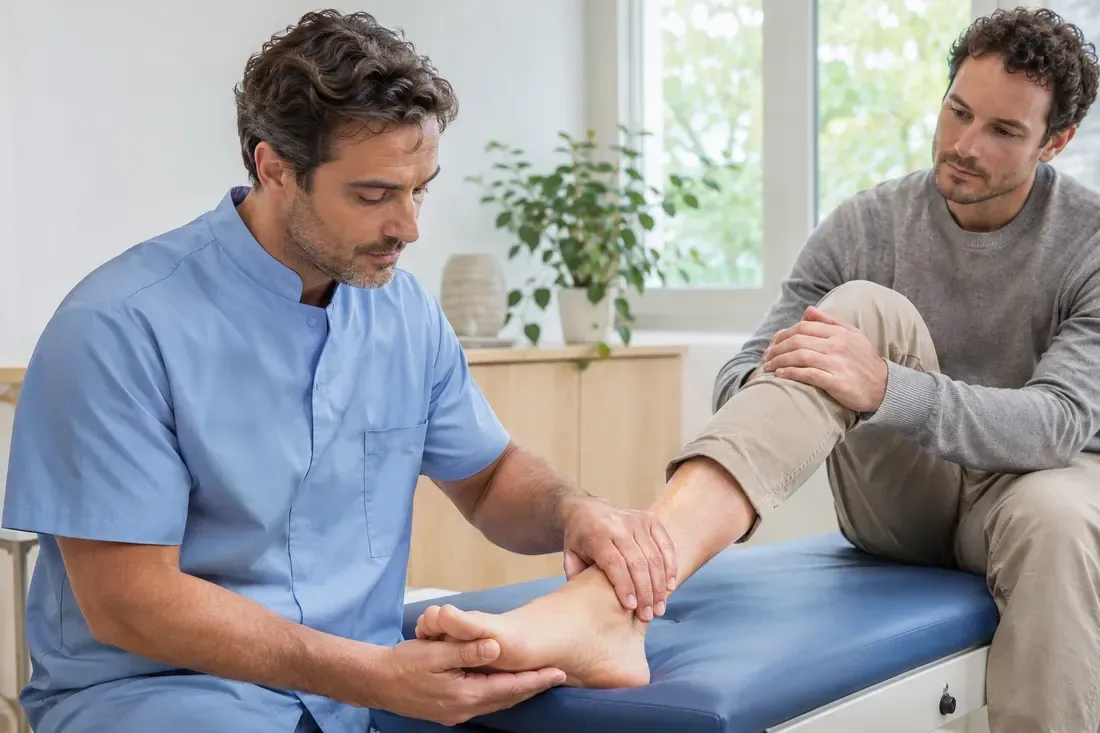
After a twist or fall, note the possibility of walking, the appearance of swelling and the painful place. A fracture is not only recognized by the intensity of the pain. Trauma-free foot pain can also be related to repeated stress or a condition that requires a balance.
Do not confuse comfort and rehabilitation
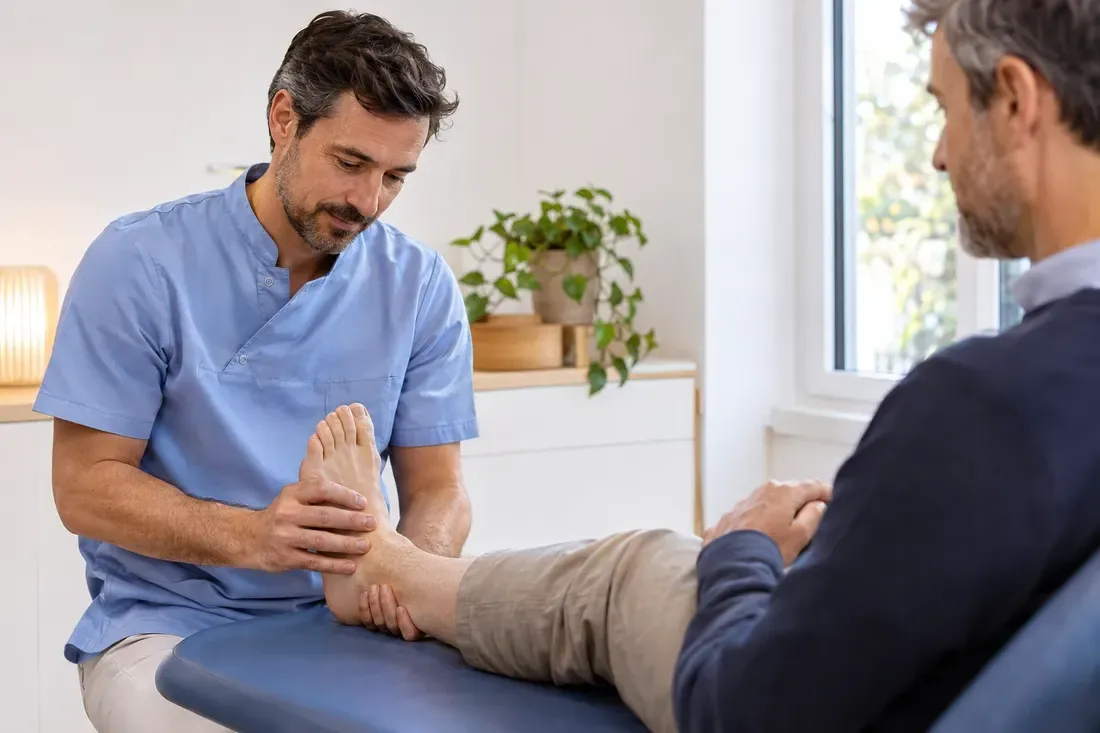
The priority after an injury is to determine the appropriate care. Manual work may sometimes be associated with active management, but it does not replace the reinforcement, balance and progression required to recover a sprain. Repeated instability deserves structured follow-up.
Resuming support gradually
Adapt your travel to the tolerance and instructions received. Don't run to check prematurely that everything is fine. A stable shoe and a progression of distances may be useful, but there is no equipment that provides re-evaluation if the support remains difficult or if the symptoms worsen.
Sources and further reading
Documentary update: November 5, 2026. General information: The choice of care depends on your situation.

To deepen
Anatomy and scientific data
Discover the mechanisms, uncertainties and scope of recommendations for this topic.
Learn more →Understanding the method of reading evidence and the limits of advice →