Understanding · Choosing · Acting
Hip pain: walking and getting up
A pain in the groin, buttocks or on the side hinders walking?
On this page
What you can observe
The hip joint, tendons or lower back may produce close symptoms. Age, trauma and walking limitations help guide the consultation.
The first landmarks in everyday life
Adapt distances and pause before a sharp worsening. Keep the activities comfortable. Simple goals, such as getting up more easily or walking to a specific place, make it possible to follow the evolution.
Describe the difficult movements
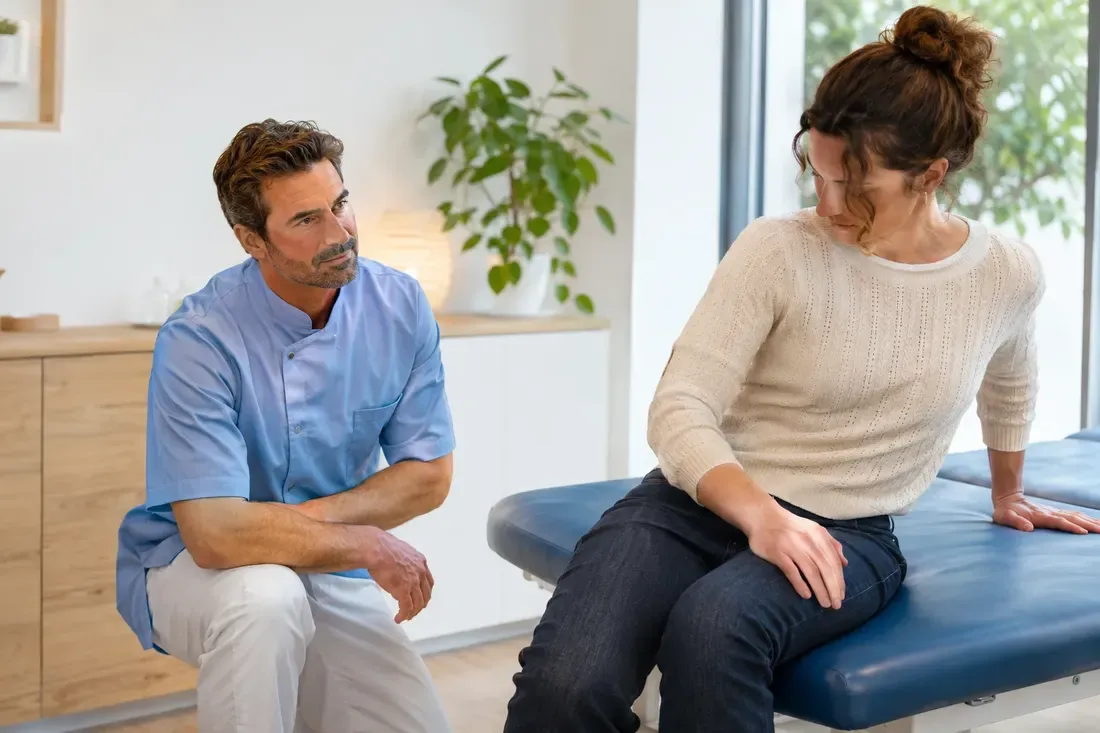
An discomfort of the groin, hip side or buttock can limit walking, stairs or entry into a car. These locations do not all indicate the same cause. Specify the duration, difficulties of support and the existence of a fall. An intense pain after trauma deserves an assessment without delay.
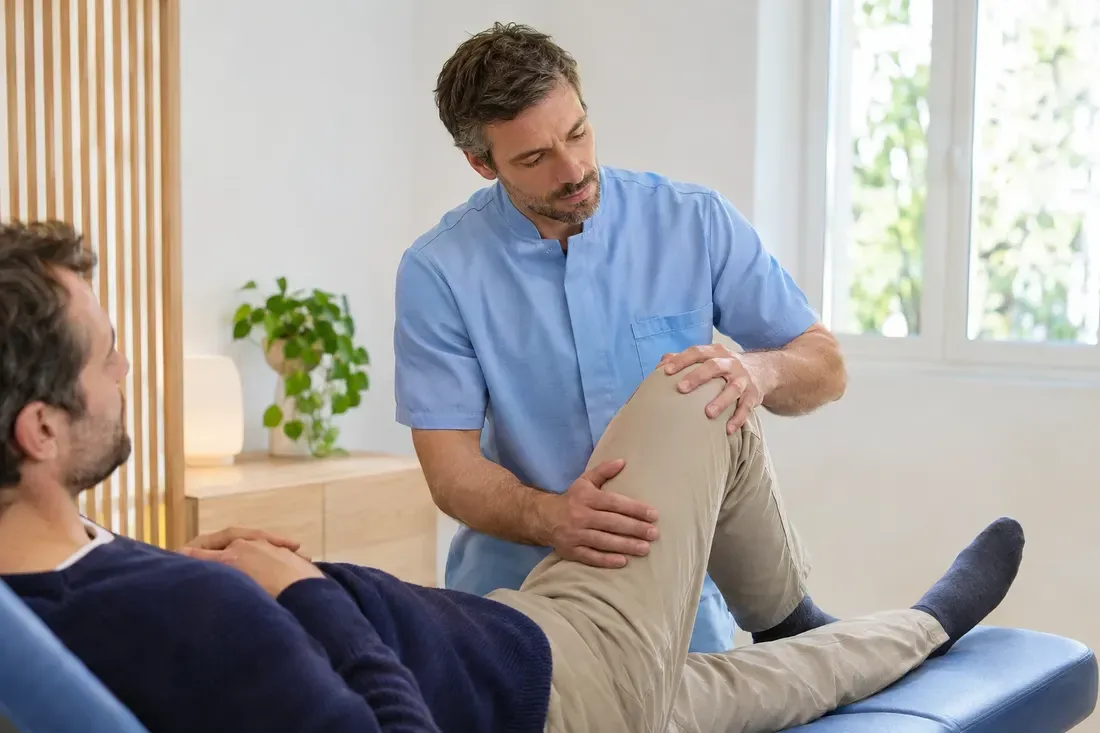
Linking examination to the step
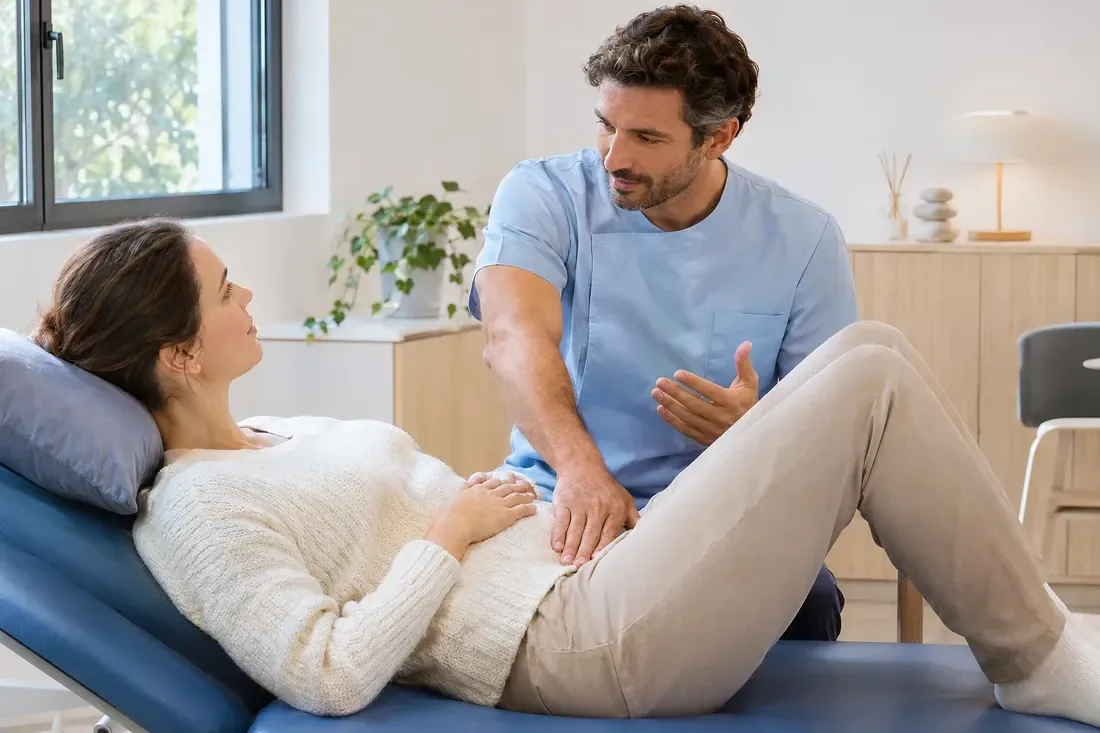
The amplitudes and useful activities are appreciated with respect for your comfort. A possible manual treatment is a possible complement, not a treatment that suppresses osteoarthritis. Depending on the context, suitable exercise, rehabilitation and medical options have a decisive place in maintaining autonomy.
Preserving regular travel
Divide the walk into supportable routes and temporarily adapt activities that irritate the area. For lateral discomfort, try to avoid prolonged pressure directly on the painful side. If support becomes impossible or if pain worsens rapidly, ask for a reassessment.
Sources and further reading
Documentary update: November 5, 2026. General information: The choice of care depends on your situation.
To deepen
Anatomy and scientific data
Discover the mechanisms, uncertainties and scope of recommendations for this topic.
Learn more →Understanding the method of reading evidence and the limits of advice →