Anatomy · Physiology · Research
Understanding hip pain
Anatomical references, proposed mechanisms and analysis of scientific data.
On this page
Scientific dossier · Separate reading of practical advice
Functional and biomechanical anatomy
The femoral head and the acetabulum form a carrier joint, surrounded by a capsule, muscles and tendons. The butt muscles contribute to the control of the pelvis when leaning on a leg. Pain in the area may come from joints, lateral tissues, spine or other structures.
Physiology and mechanisms of symptoms
Joint pain and capacity limitations do not always correspond to the importance of visible changes in imaging. Strength, balance and confidence influence walking. A lateral discomfort is not automatically an osteoarthritis and a soreness is not enough to make a joint diagnosis alone.
Clinical reasoning and guidance
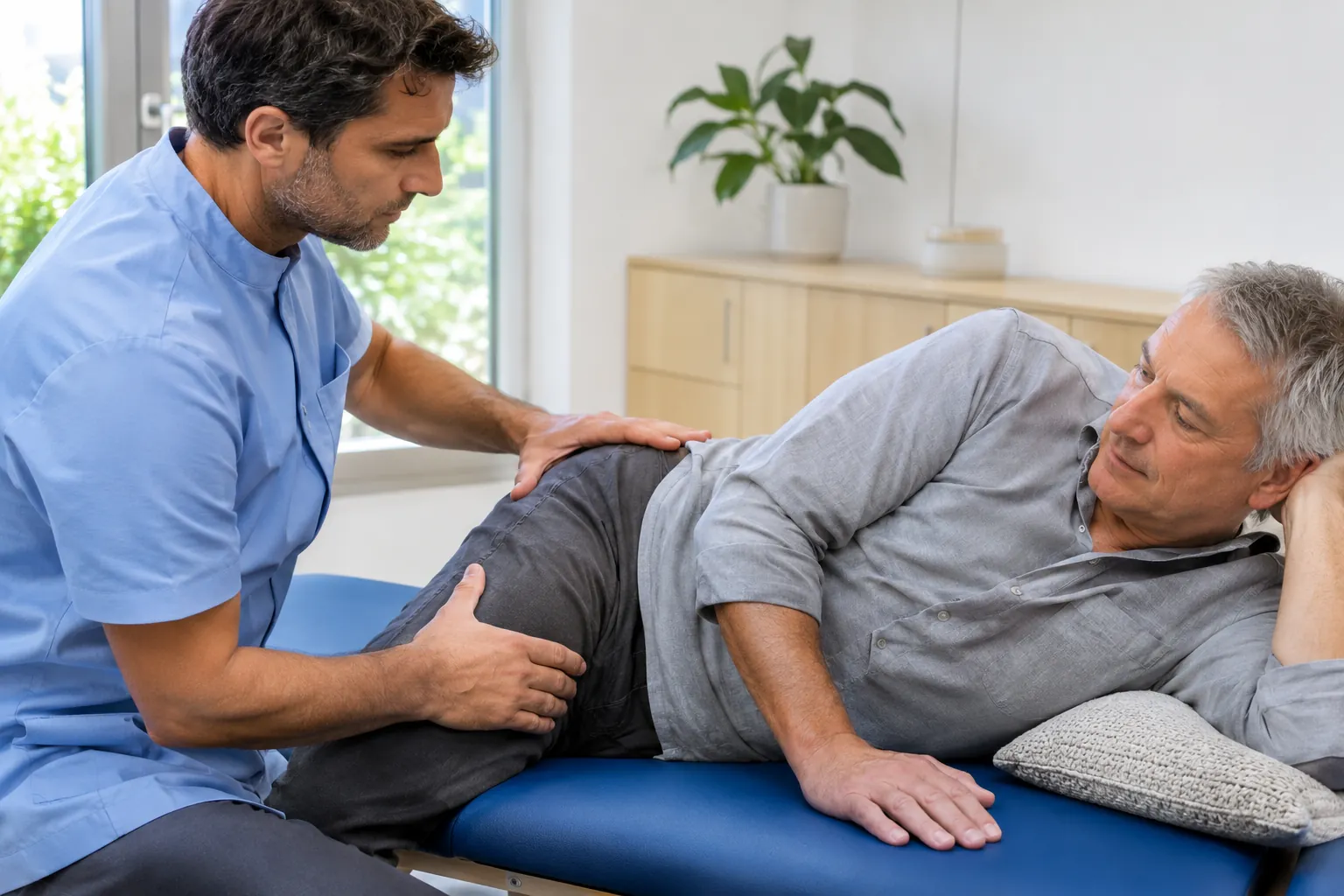
The balance sheet specifies age, beginning, possible trauma, location and support difficulties. An impossibility of walking after a fall must cause a lesion to be sought, including when the pain seems moderate. In children, lameness and hip pain follow a specific medical path.
Scientific data and recommendations
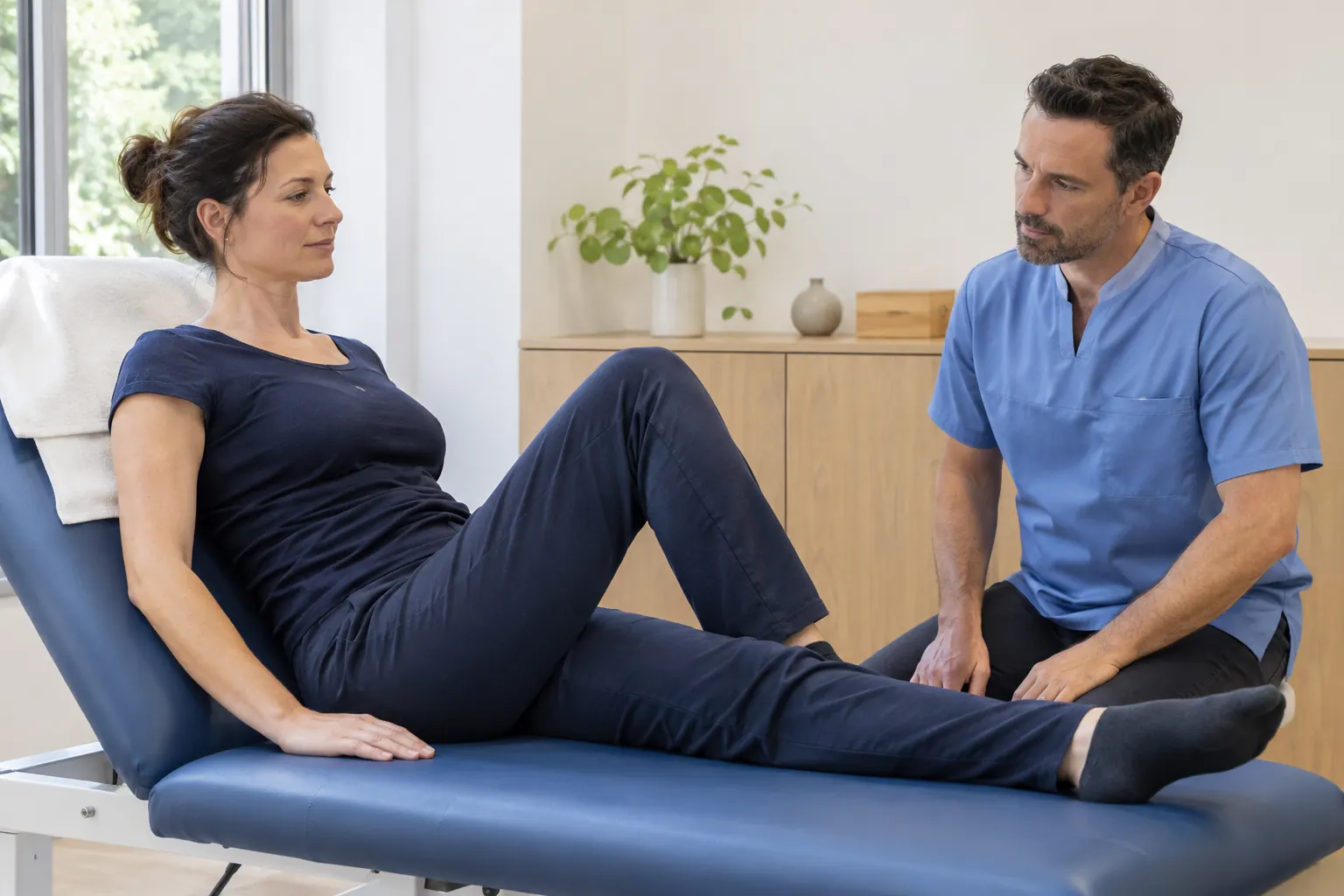
For hip osteoarthritis, NICE NG226 places therapeutic exercise at the centre of care. Manual therapy is envisaged only in addition to exercise, with information on insufficient evidence for its use alone. This recommendation does not apply to all possible causes of hip pain.
What the results do not support
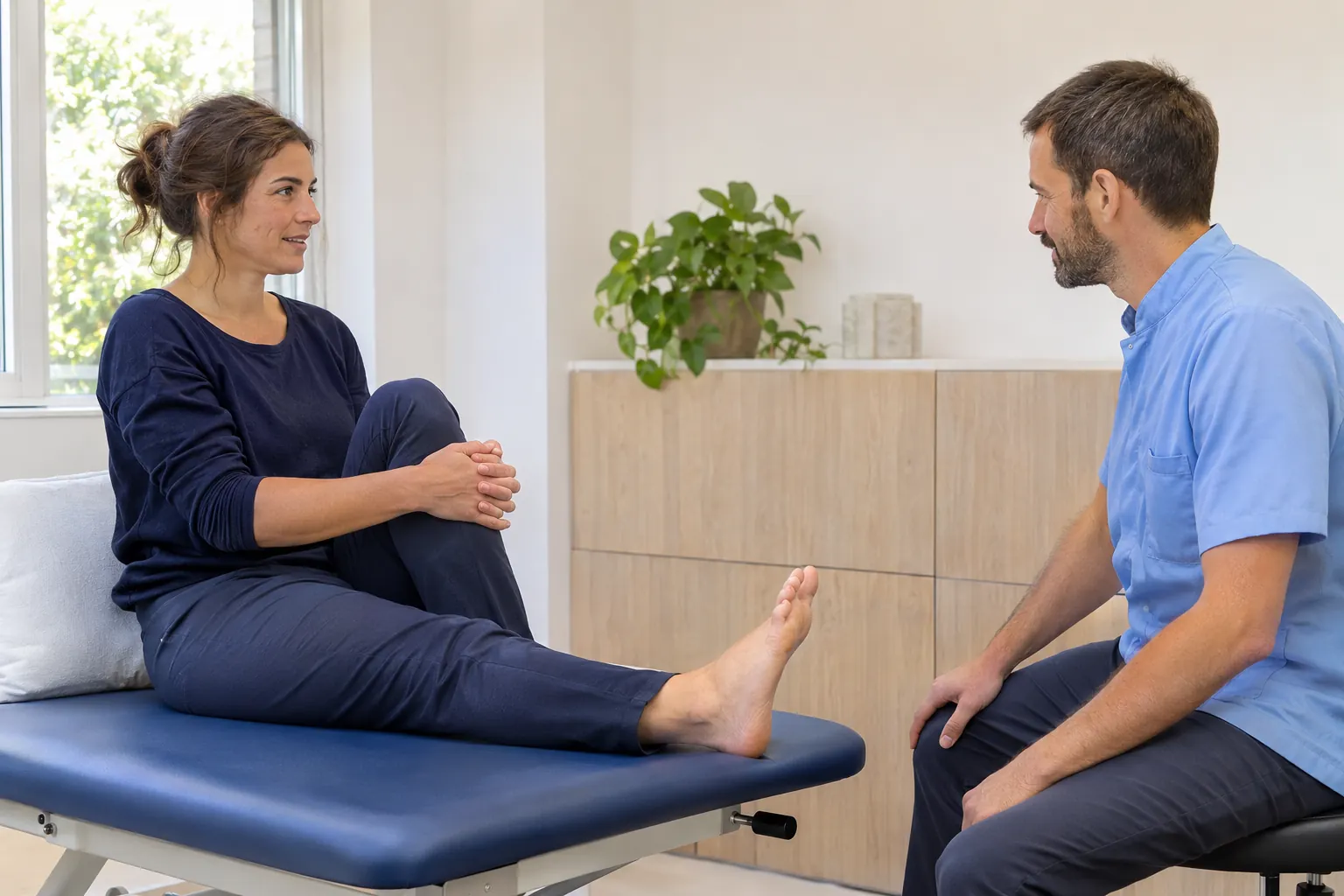
A mobility test or pelvis asymmetry does not prove that displacement explains pain. The effects of care on comfort should not be confused with a change in cartilage. The diagnosis and functional objective determine the options to be discussed, including specialized guidance if necessary.
Functional monitoring and coordination of care
Monitoring can measure walking distance, ease of getting up and leisure activities. Changes are appreciated over time, along with other interventions received. The load progression must remain compatible with symptoms and safety of support.
Scope of this file
- Population and situation
- Hip pain: walk and get up. The results must be interpreted for this specific situation.
- Choice of care
- For hip osteoarthritis, NICE NG226 places therapeutic exercise at the centre of care.
- Security priority
- Failure to support after falling, severe pain with fever or rapid aggravation requires medical assessment. Paediatric hip pain should be assessed medically.
Articulation, lateral area and projected pain
The coxo-femoral joint transmits loads between the pelvis and the lower limb. Lateral tendons and lumbar structures can also contribute to perceived pain around the hip. Therefore, the designated place is not sufficient to conclude that osteoarthritis or tendinopathy is present. The amplitudes, walking, context and associated symptoms guide the examination, with particular attention after falling or in case of impossible support.
What the osteoarthritis framework recommends
NICE proposes a management of osteoarthritis, focusing in particular on information and appropriate therapeutic exercise. Manual hip or knee care is only considered with exercise, not as an adequate isolated treatment. This recommendation does not demonstrate a regeneration of cartilage. The useful measures concern pain, function and participation in activities, with medical re-evaluation according to the path and needs.
Bibliography and original documents
Editorial and documentary review: November 5, 2026. The references describe their scope; they are not valid for all osteopathic practices.