Anatomy · Physiology · Research
Osteopathy during pregnancy: a closer look
Anatomical references, proposed mechanisms and analysis of scientific data.
On this page
Scientific deepening · pregnancy
Anatomical adaptations during pregnancy
The increase in uterine volume and the evolution of loads are gradually changing support and some movement strategies. Abdominal muscles, pelvic belt and diaphragm work in a different context. These adaptations are variable: there is no mandatory pregnancy posture or a single mechanical correction applicable to all patients.
Understand pelvic belt pain
Difficulties can occur when changing supports, stairs or transfers. Hormonal, muscle, individual and load factors interact. An explanation focused solely on relaxin or an unaligned pelvis is not sufficient. Diagnosis, resounding and the term pregnancy determine comfort proposals and orientations.
Physiology and obstetric surveillance
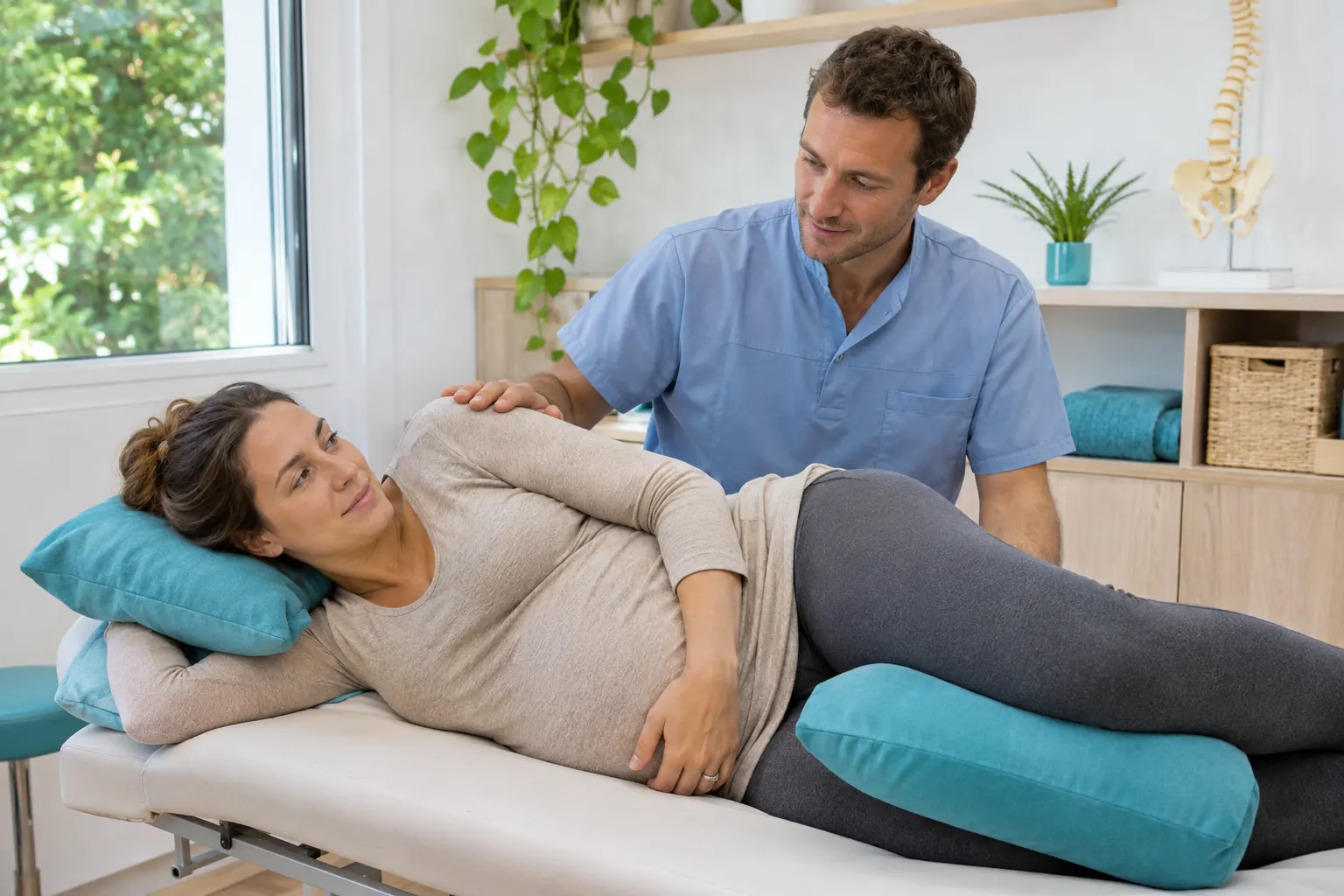
Respiratory, circulatory and digestive changes in pregnancy are not automatic indications of manual treatment. Pain and associated symptoms should be interpreted as part of obstetric follow-up. Unusual headache, visual impairment, bleeding or decreased fetal movements require contact with the professional or maternity depending on the situation.
Reading the work on manual interventions
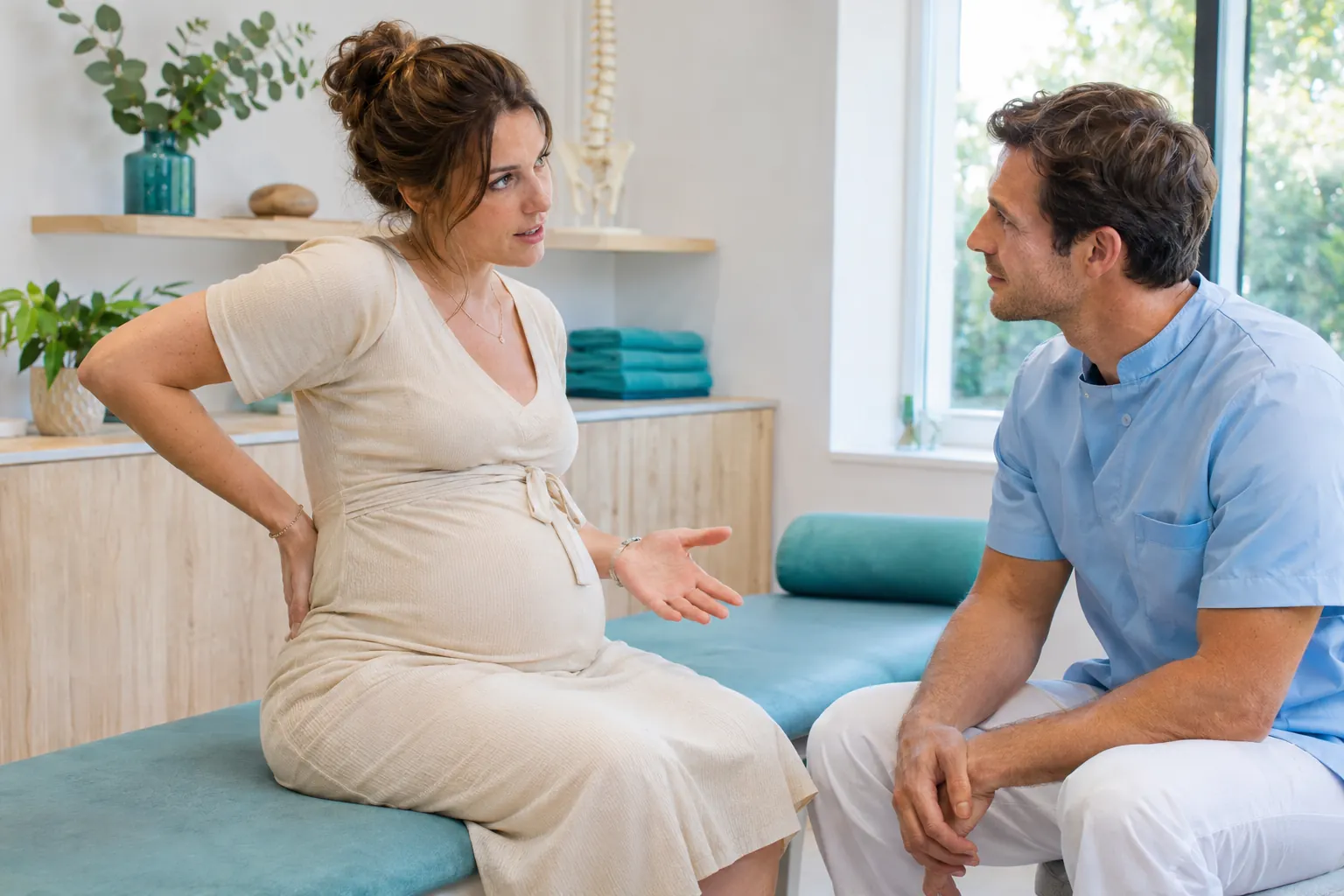
A lumbar comfort test does not necessarily assess pelvic pain or delivery results. The protocols, comparators and pregnancy periods differ. It is not reasonable to promise a prepared pelvis, a facilitated delivery or a change in fetal presentation based on these data alone. Potential benefits are discussed for a specific musculoskeletal objective.
Care decisions and adaptations
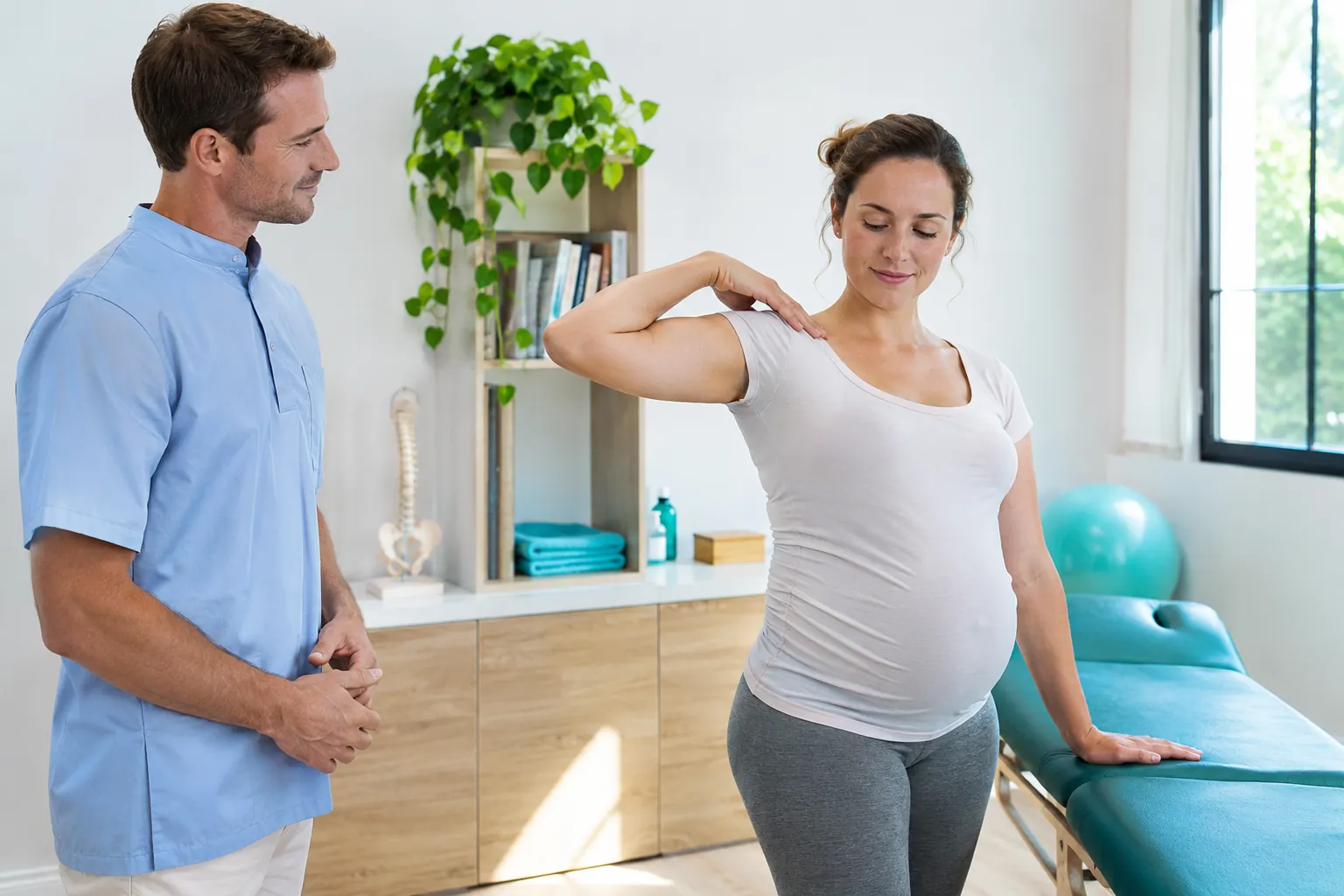
Positions, consultation time and possible techniques shall be adapted to the comfort and contraindications identified. A patient may request a change of position or refuse a move. Obstetric physiotherapy, activity planning or medical advice may be more relevant depending on the outcome. There is no manual care to replace pregnancy monitoring.
Follow-up criteria after consultation
The result may concern walking, turning in the bed or dressing with less discomfort. It is appreciated with rest, adaptations and other interventions. Aggravation, a new symptom or a lack of improvement calls for a re-evaluation of the course. After delivery, needs change and postnatal follow-up guides recovery, especially in the presence of perineal symptoms.
Systems that adapt simultaneously
Pregnancy combines changes in mass distribution, cardiovascular adaptation and changes in abdominal and pelvic constraints. These transformations do not mean that a basin would necessarily be displaced. Pain is not predicted from a single postural angle or assumed laxity. Pelvic discomfort, back pain and abdominal pain can share a region while reporting different clinical decisions.
Interpreting research in pregnant women
Tests shall specify the term, criteria for obstetric exclusion, techniques, comparators and follow-up. An improvement in reported comfort does not show an effect on the delivery process, the fetal position or the baby's health. Safety is not established by the mere absence of an event in a small series. Conclusions should remain limited to the actual study population and should not be generalized to at-risk pregnancies.
A clinical goal that remains maternal and explicit
If manual accompaniment is considered, it is about a comfort symptom compatible with the situation, after taking into account obstetric follow-up. It can be evaluated on a task such as walking or turning around, without changing maternity instructions. New obstetric, vascular or neurological symptoms require a competent re-evaluation; systematically explaining them with ligamentary tension would be inappropriate.
Bibliography and original documents
- Pelvic belt pain and pregnancy Royal College of Obstetricians and Gynaecologists. 的
- Osteopathic treatment and lombopelvic pain Systematic review and meta-analysis. 的
- Manual therapies during pregnancy Systematic review highlighting the limitations of evidence. 的
- Read the original publication or recommendation
Documentary review: November 5, 2026. Publications are interpreted according to their population, method and limitations.