Lower back pain
Lower back bore when standing, walking, sitting-standing or after a long day.
Your symptoms · Your daily life
Sensitive back, painful pelvis or less comfortable gestures?
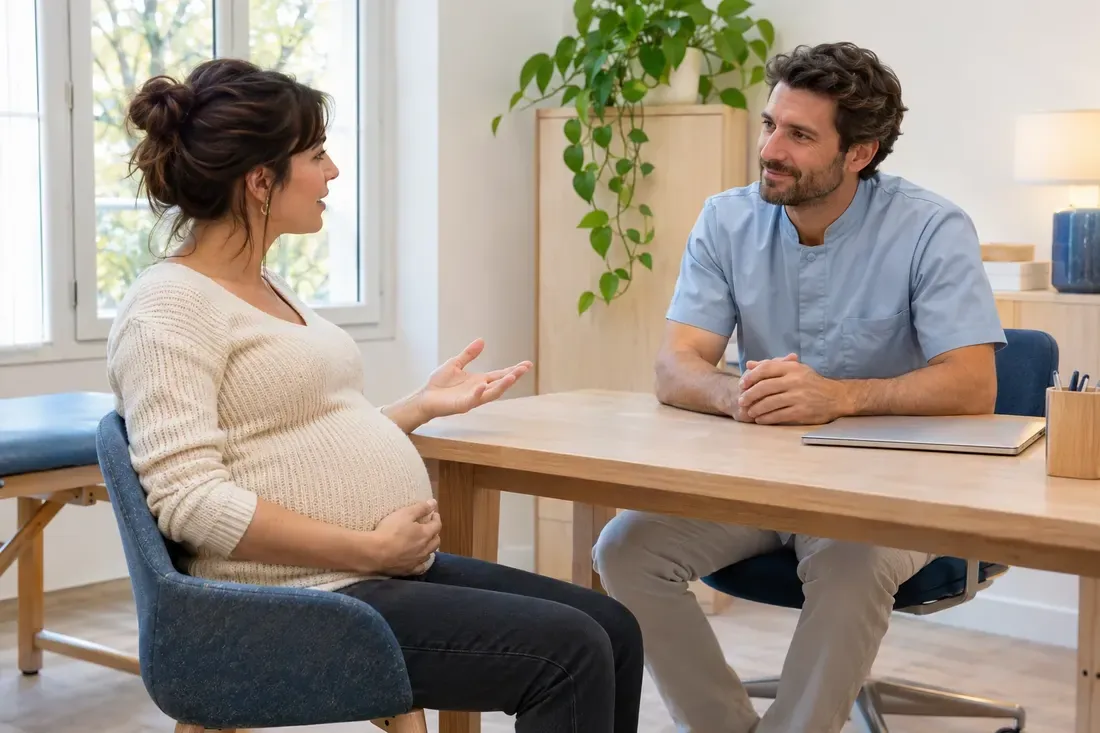
Turning around in bed, walking, standing up or climbing stairs can become uncomfortable during pregnancy. We take the time to understand your discomfort and consider suitable accompaniment, in addition to the maternity follow-up.
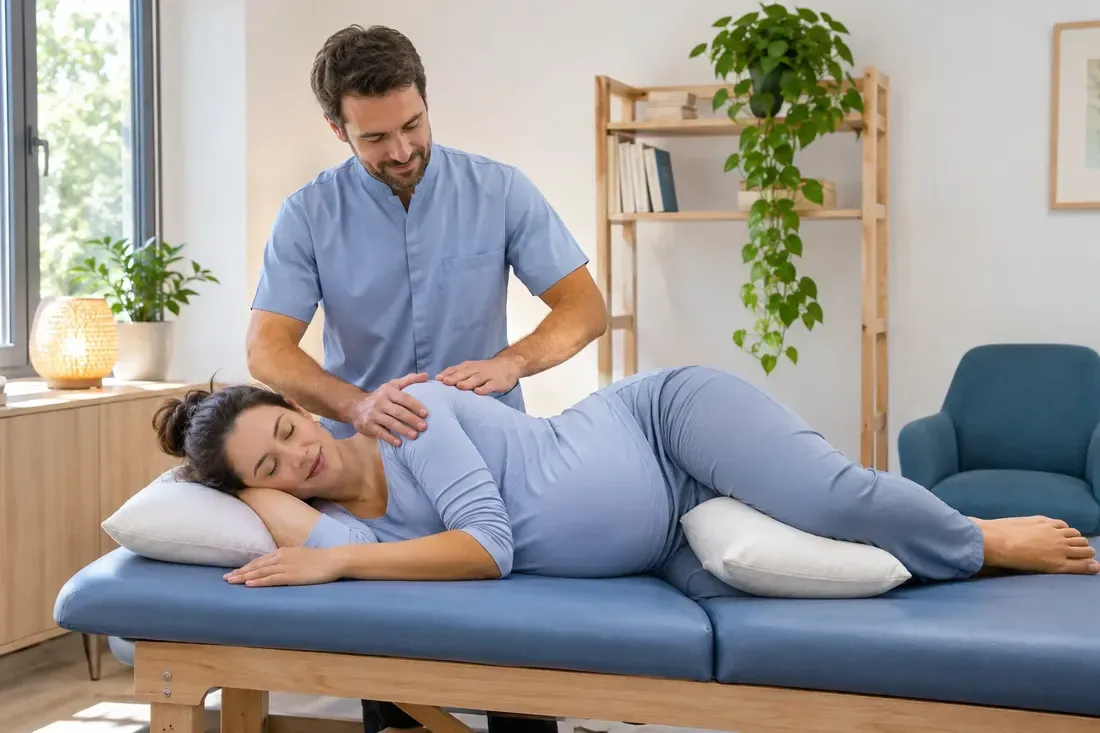
Pregnancy gradually changes the load distribution, posture, breathing and mobility of the pelvis. These adaptations are physiological, but may be accompanied by pain or difficulty in daily activities. The pattern should always be placed in the term of pregnancy, history and evolution of symptoms.
Lower back bore when standing, walking, sitting-standing or after a long day.
Pain around the sacrum, sacro-iliac joints, pubis, hips or thighs, sometimes increased in the stairs or in the back of the bed.
Sensation of middle back stiffness or costal discomfort associated with postural and respiratory adaptations.
Mechanical pain influenced by walking, sitting or holding. Irradiated pain may require medical assessment.
Difficult to change position, enter a car, walk long or find a comfortable rest position.
Gradual resumption of mobility after delivery, caesarean section or a period of immobility, in coordination with the care indicated.
Essentials: osteopathic counselling never replaces pregnancy follow-up by the midwife, doctor or maternity team. It may be considered for certain functional and musculoskeletal disorders after verification of the absence of a situation requiring medical advice.
Osteopathic consultation is not adapted in the first place In case of bleeding, loss of fluid, regular or unusual contractions, decreased movements of the baby, fever, severe abdominal pain, malaise, chest pain, shortness of breath, painful swelling of a calf, intense headache with visual impairment or sudden symptom. Contact your maternity, midwife, doctor or emergency room depending on the situation.

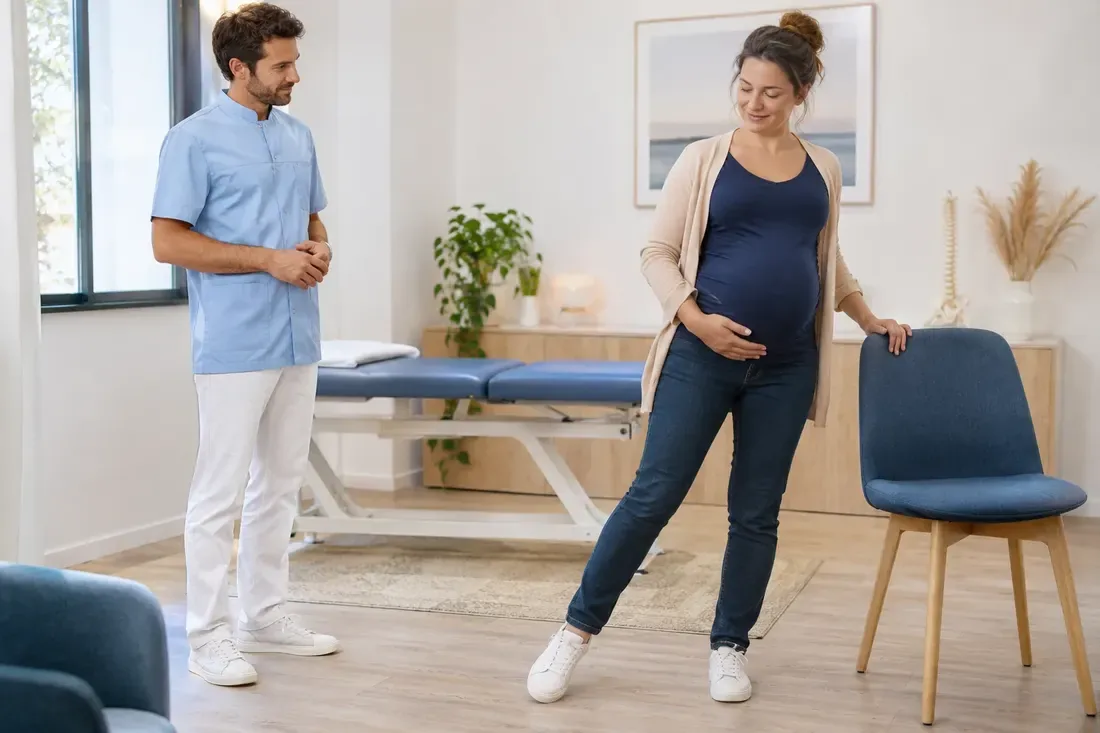
The decision depends on the reason, the obstetric follow-up and your general condition. The session is adapted to the term and no uncomfortable position is imposed.
No. The choice of positions, intensity and techniques are adapted to the pregnancy, history and preferences of the patient.
An osteopathy appointment cannot be claimed to change the baby’s presentation. This question should be discussed with the midwife, obstetrician and maternity team.
Yes, for musculoskeletal discomfort, after taking into account the possible obstetrical and surgical context. Prescribed rehabilitation retains its place.
Understanding the method of reading evidence and the limits of advice →
To go further
Anatomy, functioning of the body and state of knowledge: find detailed explanations and international references.
A consultation adapted to your pregnancy and coordinated with your medical follow-up.