Anatomy · Physiology · Research
Osteopathy for older people: a closer look
Anatomical references, proposed mechanisms and analysis of scientific data.
On this page
Scientific deepening · Senior
Functional reserves and heterogeneity
Age progression does not define a single level of capacity. Strength, vision, sensitivity, balance and cognitive functions contribute to activities. Some people remain very active; others have a fragility or diseases that reduce their room for adaptation. The examination must be based on the real situation and objectives of the person.
Bone, joints and care precautions
Loseoporosis, previous fractures and some surgical procedures change the choice of gestures. Post-fall pain can justify an assessment even without significant shock. The amplitudes and forces applied shall not be chosen solely on the technical habit. Treatments, including anticoagulants, are part of the information needed for safety.
Balance and risk of falling
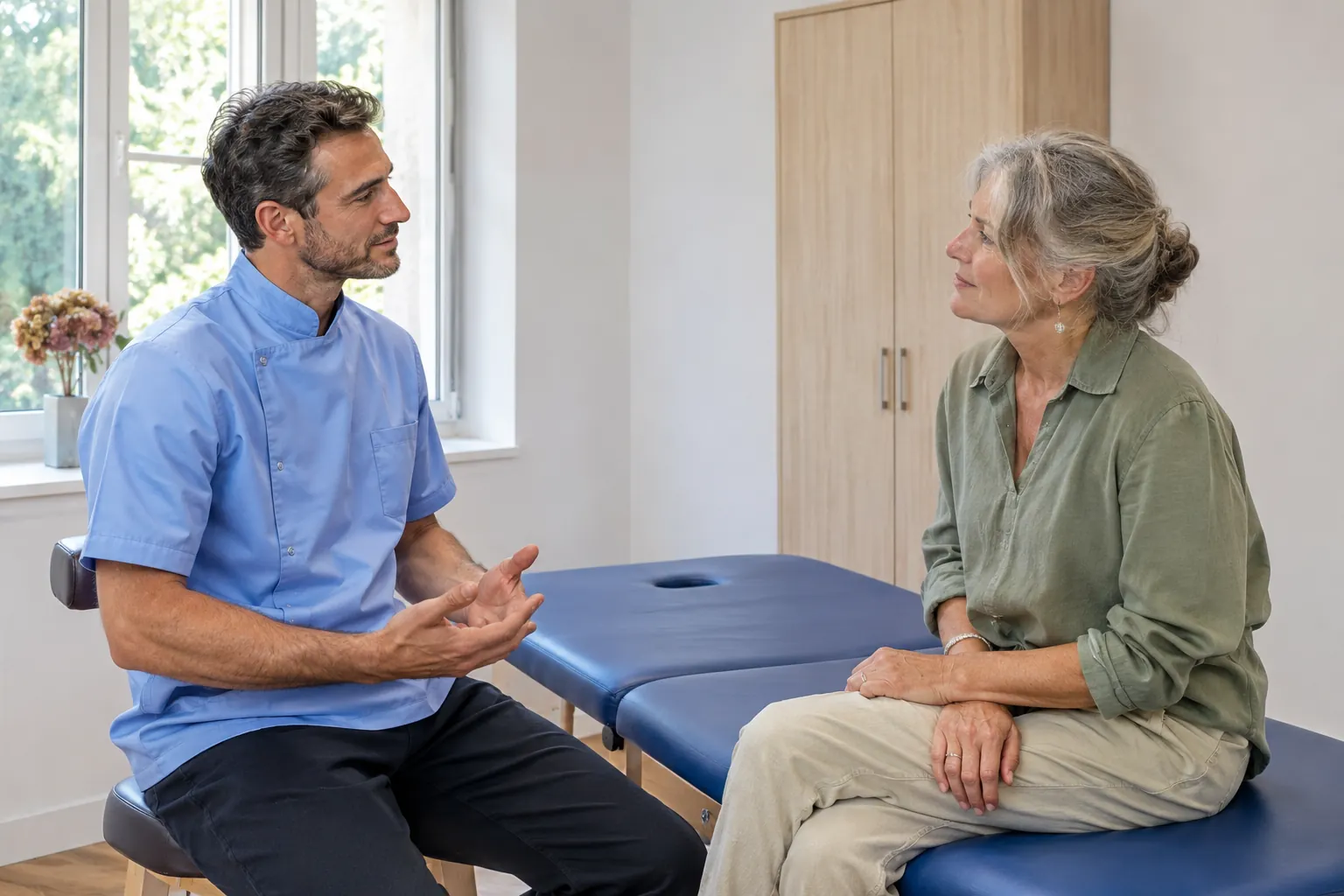
Stability depends not only on the joints. Drugs, tension variations, vision and housing can contribute to falls. The benefit of an intervention on comfort does not prove that it reduces the risk of falling. A multifactorial evaluation is more relevant than a single narrative of misalignment or a single equilibrium test.

Substantiated interventions and place of manual care
The fall prevention recommendations support measures adapted to the identified risks, including physical and environmental capabilities. In the case of osteoarthritis, therapeutic exercise remains central. Possible manual care is seen as a complement to a specific objective, with varying effects; it does not replace the prevention programs and treatment indicated.
Coordinate the interlocutors
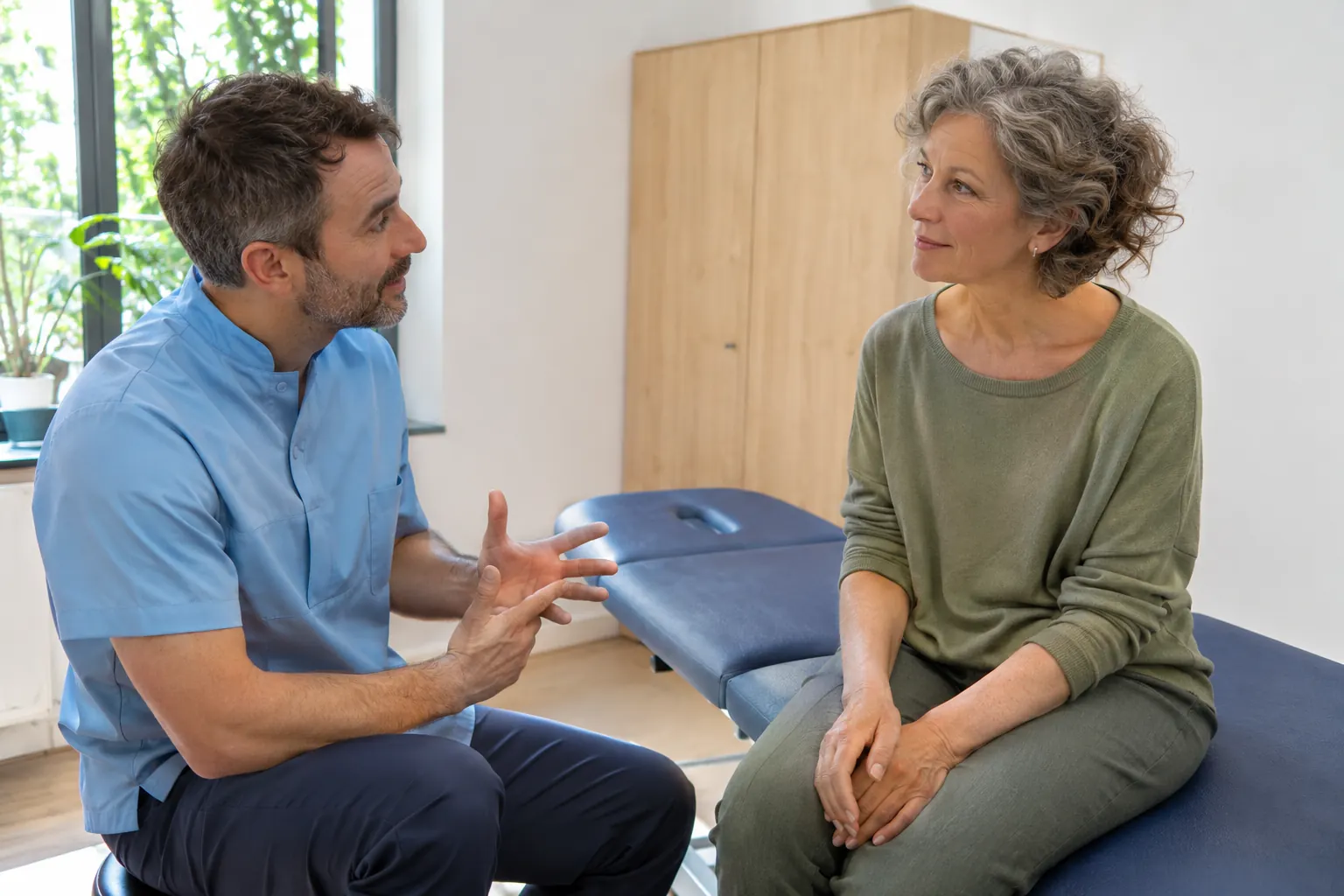
Physician, physiotherapist, occupational therapist, adapted and close physical activity professional can contribute to different needs. Technical assistance is not a failure: it can help to get out and maintain activities. A malaise, a recent weakness or a fall with head shock first requires the appropriate medical path.
Monitoring focusing on autonomy
Success can be seen in actions that are important to the person: getting up, washing, joining a business or visiting a loved one. Fatigue and safety must be taken into account, without imposing performance. Preferences and the environment guide the plan. A transitional improvement after a session is appreciated in the light of the actual maintenance of activities and quality of life.
A variable functional reserve
Age progression may be accompanied by reduced strength, sensory changes and slower recovery, but individual trajectories are very different. Mobility results from several systems, not from one joint. A recent slowdown may be related to a drug, acute condition, pain or loss of confidence after falling; the context must be explored before assigning the problem to aging.
Why falls prevention is multifactorial
The NICE recommendations on falls emphasize an assessment tailored to individual risks. Vision, balance, strength, treatments, hypotension and environment can occur. An isolated manual technique is not a fall prevention program. The relevant exercises must have adequate progression, sufficient safety and continuity, with professional support when the ability or history of fall warrants it.
Select useful and acceptable criteria
The autonomy to get up, the usual walking distance and the possibility of exiting are concrete landmarks. They must be balanced against fatigue and safety. A session that relieves momentarily does not compensate for progressive loss of strength or repeated discomfort. The intensity of manual contact takes into account bone fragility, treatments and preferences; medical orientation is part of the management.
Bibliography and original documents
- Physical Activity and Aging World Health Organization. 的
- Fall Prevention World Health Organization. 的
- Osteopathic treatment in seniors Review of the scope of clinical data. 的
- Manual therapy and chronic back pain Systematic review in the elderly. 的
- Read the original publication or recommendation
Documentary review: November 5, 2026. Publications are interpreted according to their population, method and limitations.