Back and neck pain
Back pain, back pain or mechanical neck influenced by positions, activities or a recent decrease in movement.
Your symptoms · Your daily life
Rider at rising, sensitive back or gestures that have become difficult?
Walking, gardening, turning your head or raising your arm: an embarrassment can limit the activities you care about. The consultation seeks to understand these difficulties and to propose gestures adapted to your health and comfort.
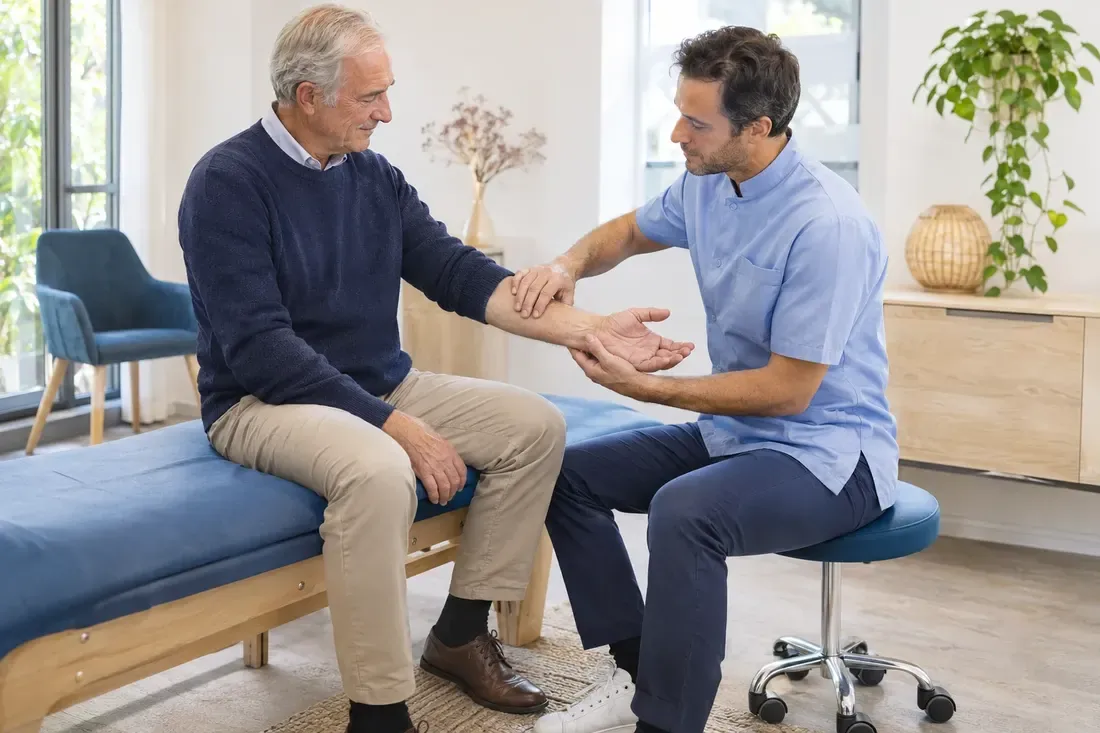
Aging alone does not explain pain. A new or rapidly progressive discomfort should be evaluated, while a musculoskeletal disorder already known may sometimes benefit from complementary support centered on comfort and function.
Back pain, back pain or mechanical neck influenced by positions, activities or a recent decrease in movement.
It interferes around a diagnosed joint, with the aim of preserving useful movements. The osteopathy does not regenerate cartilage.
Unfortunate during walking, stairs or transfers, after exclusion of fracture, acute injury or medical cause.
Difficulties in dressing, reaching a shelf, wearing or using technical assistance in the context of a musculoskeletal disorder.
Resumption of mobility after less active period, hospitalization or intervention, with the agreement of the medical team and in addition to rehabilitation.
Search for solutions to stay active in everyday gestures, gardening, walking or leisure, without promising to slow down aging.
Essentials: age does not prohibit manual consultation, but requires careful assessment of general condition, possible osteoporosis, anticoagulant treatments, operations, chronic diseases and risk of falling. The techniques are chosen accordingly.

The World Health Organization recommends that people aged 65 and over stay as active as their condition permits. In the case of reduced mobility, balancing exercises are particularly important. For people at risk, falls prevention is multifactorial: strengthening and balancing, home adaptation, drug review, vision, shoes, blood pressure and causes of dizziness.

After a fall, severe pain, impossibility of support, deformation or shock to the head require medical evaluation, especially under anticoagulant. Also check quickly in case of sudden weakness, speech disorder, confusion, chest pain, shortness of breath, fever, unexplained weight loss, unusual night pain or rapid aggravation.

Yes in some situations, taking into account the date of surgery and the surgeon's recommendations. The prosthesis itself is not manipulated and any suspected complications are medically monitored.
We've got to report it. Bone fragility alters the choice of techniques and acute pain after an effort or fall may require medical imaging.
She can't guarantee it. Progressive programmes of strength and balance, housing security and medical assessment are essential measures.
Yes, with the patient's consent. This may be useful in clarifying treatment, history, falls or daily difficulties.
Understanding the method of reading evidence and the limits of advice →
To go further
Anatomy, functioning of the body and state of knowledge: find detailed explanations and international references.
A consultation tailored to your health, mobility and daily goals.