Anatomy · Physiology · Research
Osteopathy for athletes: a closer look
Anatomical references, proposed mechanisms and analysis of scientific data.
On this page
Scientific deepening · sport
Textiles and sports-specific requirements
Muscle, tendon, bone and joints do not respond identically to a load. Speed, repetition, direction and recovery determine the constraints. The reasoning must integrate the real sport: a runner, goalkeeper and a person taking a hike do not have the same functional need or progress.
Adaptation, recovery and symptoms
Training builds a capacity over time. Program change, close competition or increased fatigue may alter tolerance. Pain is not always proportional to a lesion, but it should not be systematically trivialised as a mere lack of mobility. Sleep, nutrition and the context of life contribute to recovery.
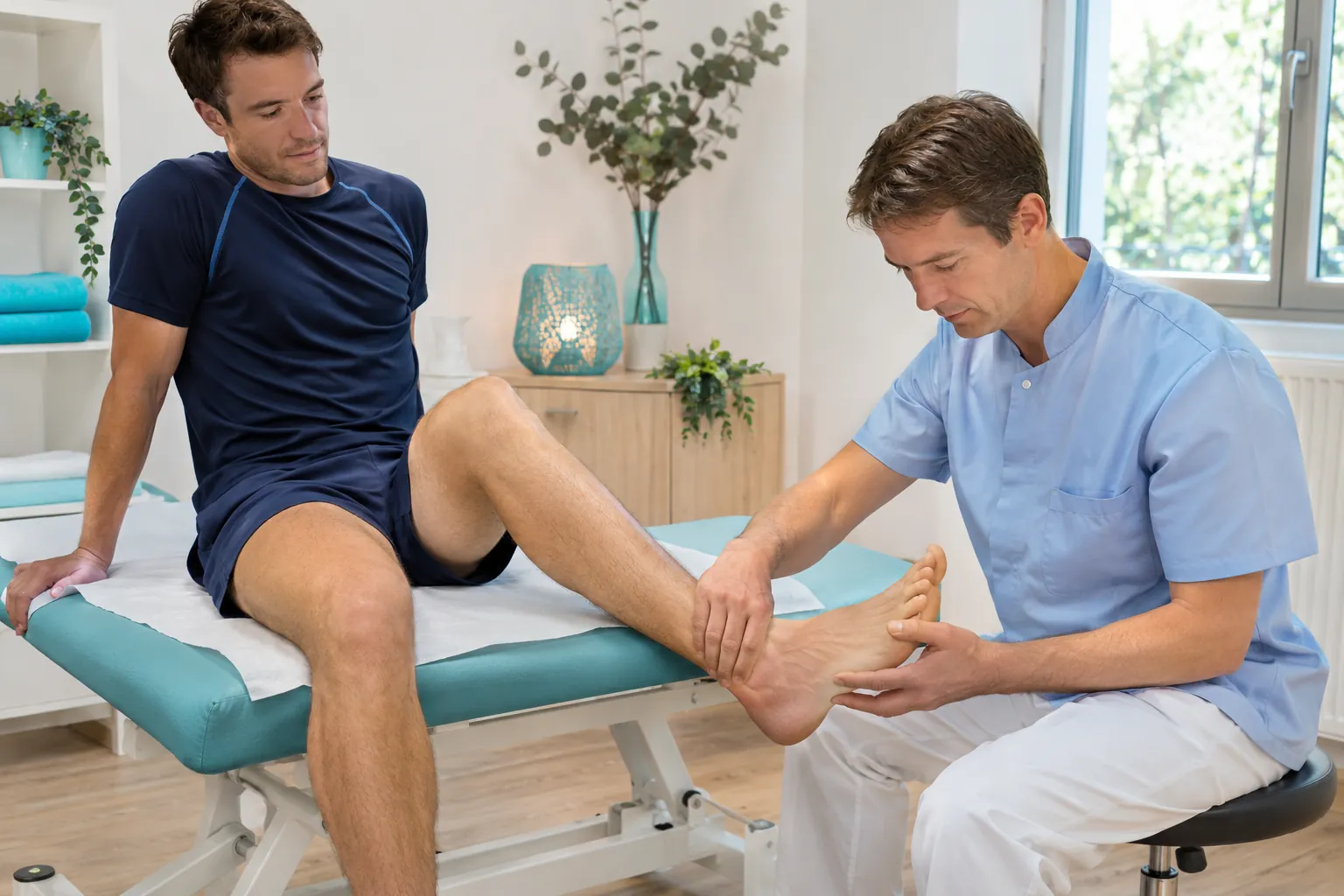
Biomechanical: describe without overinterpretation
A difference between the sides or a technical variation does not automatically identify a causal factor. Biomechanics can help organize observation and adaptation; they do not predict all injuries on their own. A movement deemed imperfect can be well tolerated, while an excessive load remains problematic even with a careful technique.

Evidence of care and performance
Research must distinguish pain, return to activity, performance and injury prevention. An increase in amplitude after a session does not demonstrate an improvement in speed or a decrease in the risk of recurrence. The recommendations of activity and rehabilitation do not validate a global promise of sports optimisation by osteopathy. The possible care is discussed as a supplement adapted to an identified discomfort.
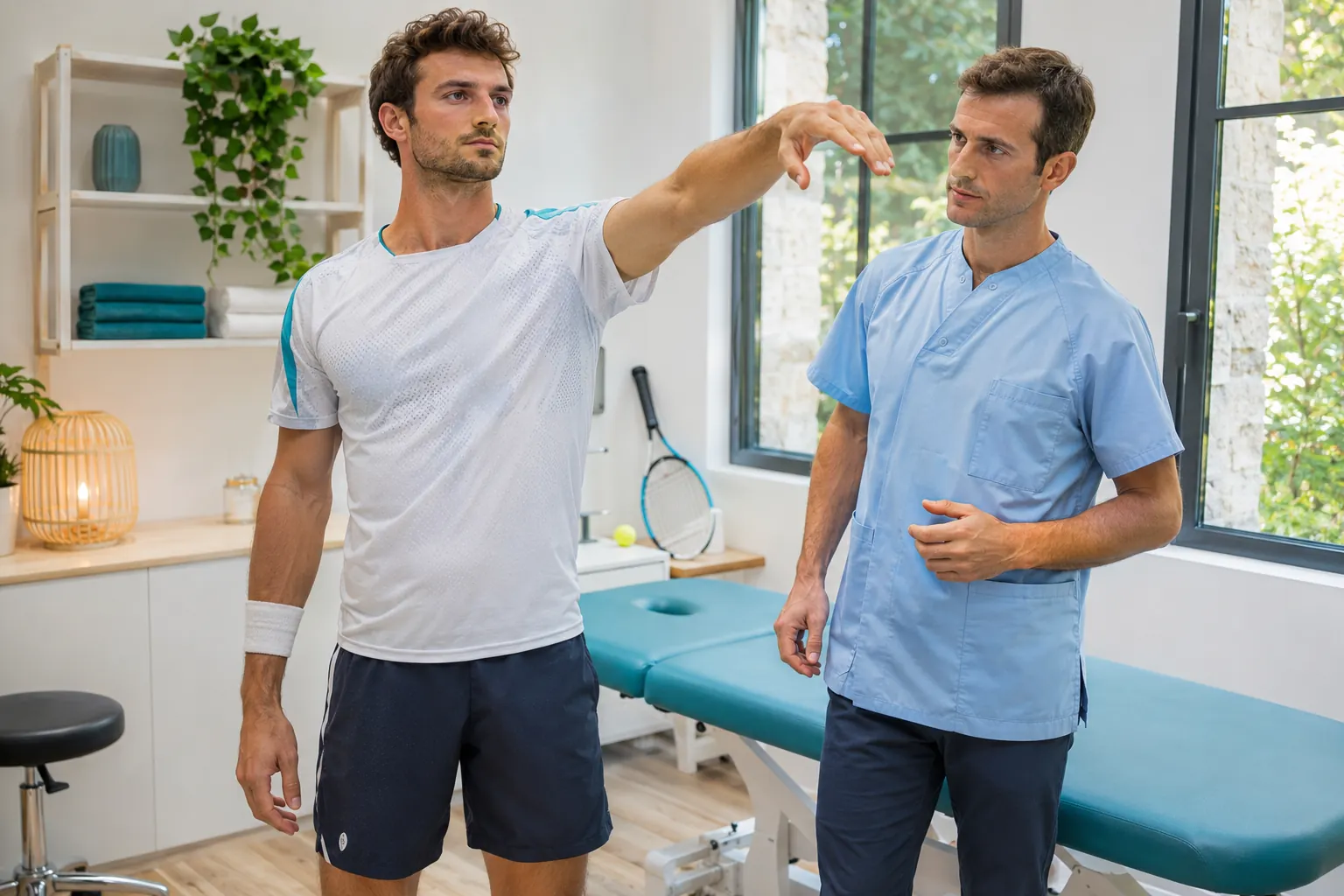
Diagnosis and coordinated course
Acute injury, loss of strength, instability or stress symptoms may require sports medicine, imaging or physiotherapy. Cranial shock and suspicion of concussion follow a specific path; recovery is not decided from the mere disappearance of pain. Thoracic signs or stress discomfort require a medical assessment.
Back to sport and follow-up
The progression considers the ability to repeat useful gestures, reaction within the next few hours and confidence. Caregiver and caregivers can adjust the constraints together. The goal is a sustainable return, without setting a universal deadline or announcing a cure after a predefined number of sessions. The criteria must correspond to the sport and the level of practice.
Tissue capacity and exposure
Tolerance to an activity depends on the repeated load, recovery and current tissue capacity. Pain may occur after a change in training without the ability to deduce a misalignment. The tendons, muscles, ligaments and bones do not respond identically to the stresses. Some injuries require a targeted reduction in exposure or medical diagnosis, while others require an appropriate activity.
Distinguish the results studied
Manual therapy studies can measure pain, amplitude, function or performance. These criteria are not equivalent: an increased amplitude immediately after treatment does not show an improvement in stroke or a decrease in injuries. To assess prevention, sport exposure and injury should be observed over a sufficient period of time with an appropriate comparator group. An athlete's satisfaction does not replace this demonstration.
Decision to return to sport
The recovery is based on injury, necessary functions, tolerance to training and the athlete's confidence. Transitional relief is not enough to allow competition if capacity is not restored. Depending on the diagnosis, the physician and physiotherapist coordinate rehabilitation and progression criteria. FIFA Diploma in Football Medicine is on the practitioner's journey; it is not a sports doctor's title.
Bibliography and original documents
- Sports load and risk of injury International Olympic Committee Consensus. 的
- Manipulation and sports performance Systematic review concluding with weak evidence. 的
- Asymptomatic adult performance Review of the effects of spinal manipulation. 的
- Low back pain and physical activity Recommendations of the High Health Authority. 的
- Read the original publication or recommendation
Documentary review: November 5, 2026. Publications are interpreted according to their population, method and limitations.