Load-related pain
It appeared after an increase in mileage, intensity, competition, strength or a recovery too fast.
Your symptoms · Your daily life
A pain or stiffness bothers you in your sport?
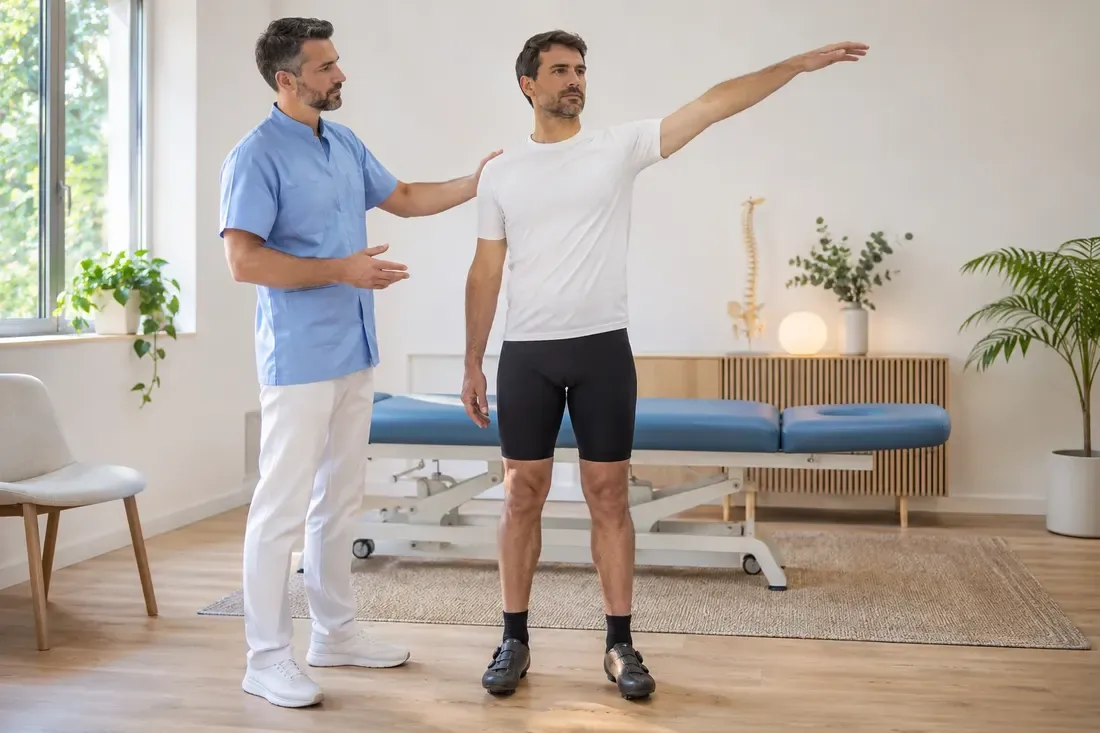
Sensitive back after an exit, uncomfortable shoulder, less free movement: the session starts from the gesture that bothers you and your practice. The objective is to discuss with you, taking into account any injury and your follow-up.
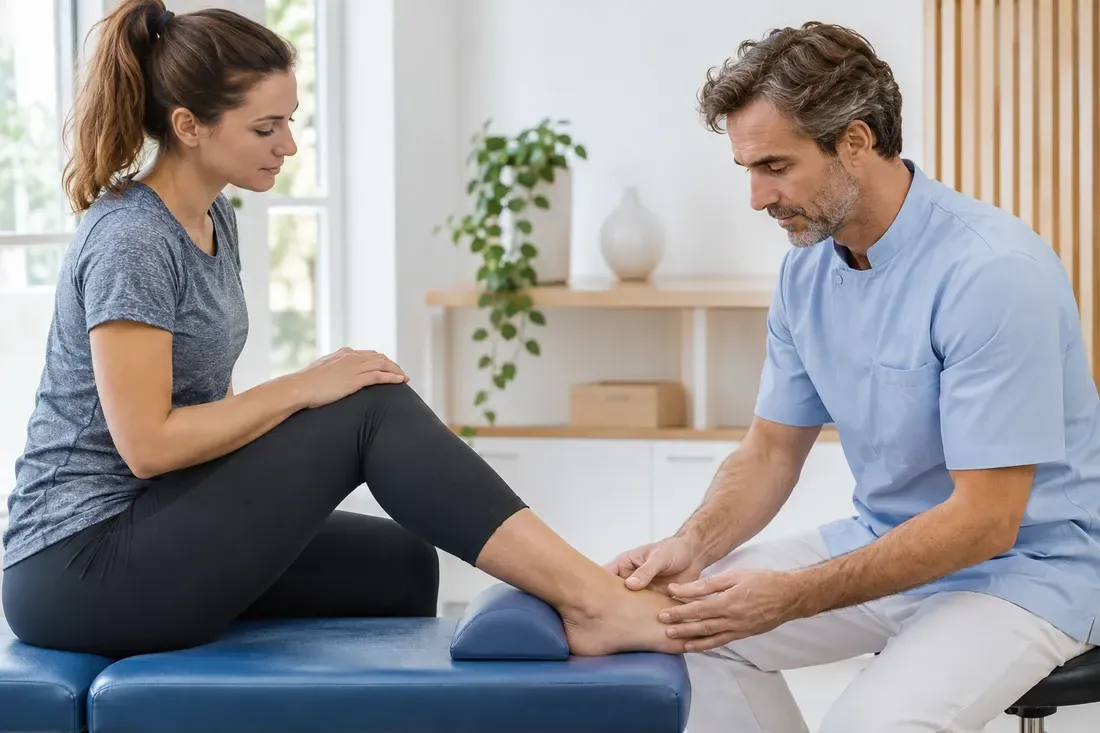
The same symptom does not have the same meaning in a beginner runner, a competing footballer or a person who resumes an activity after several months. The analysis takes into account sport, volume, intensity, recent changes and professional or personal constraints.
It appeared after an increase in mileage, intensity, competition, strength or a recovery too fast.
Limitation felt when heated, in an amplitude or during a specific gesture, without identified acute trauma.
Back pain, back pain or neck influenced by practice, playstation, cycling, running, bodybuilding or travel.
Hip, knee, ankle or foot already assessed, or mechanical pain without sign of severity requiring orientation.
Shoulder, elbow, wrist or hand required in sports of throwing, snowshoeing, fighting, climbing or force.
Persistence of a functional discomfort despite consolidation, in addition to medical follow-up and rehabilitation.
Essentials: osteopathic counselling may complement a path of musculoskeletal care, but it does not replace the diagnosis of injury, rehabilitation, physical preparation or medical authorization for recovery. Antoine Chollet holds the FIFA Diploma in Football Medicine.

The International Olympic Committee's consensus stresses that the risk of injury depends less on an isolated level of load than on how the load is changing and the individual ability to adapt to it. Moderate and steady progression is generally better tolerated than large variations. Sleep, displacement, stress, history and recovery also influence this adaptation.
The review therefore seeks to answer three questions: What's changed? What gesture or charge triggers the symptom? What are the factors that make it possible to continue the activity without aggravating the situation? The goal is not to "replace" the body, but to understand the constraints and contribute to an active strategy.
Deformity, impossibility of support, rapid swelling, intense pain after trauma, loss of strength or sensitivity, chest pain, shortness of breath, malaise, fever or head injury require medical assessment. A suspicion of concussion requires immediate cessation of activity and a medical protocol to return to sport.

A session is not essential in a symptomless athlete and does not guarantee better performance. Avoid discovering a new intervention just before an important goal.
This depends on origin, intensity and evolution. Mild and stable pain does not have the same meaning as growing pain, lameness, instability or loss of strength. Medical or kinesitherapic advice may be required.
No. Kinesitherapy is central when structured rehabilitation, reinforcement or functional progression is indicated.
There is no standard package. The situation must be reassessed; failure to improve or repeated recurrences must lead to a review of the diagnosis, burden and care strategy.
Understanding the method of reading evidence and the limits of advice →
To go further
Anatomy, functioning of the body and state of knowledge: find detailed explanations and international references.
Describe your practice, embarrassment and objectives during the consultation.