Understanding · Choosing · Acting
Discomfort during sport: adjusting load and return to activity
A pain comes back during or after your activity?
On this page
What you can observe
The appearance of an discomfort can follow a change in volume, intensity, material or recovery. This is not enough to determine the subject fabric. An acute injury or a persistent symptom deserves to be assessed.
The first landmarks in everyday life
Note the duration and intensity of the sessions, the reaction during the effort and the next day. Reduce what causes a sharp worsening, then build a gradual recovery rather than alternate complete stop and brutal recovery.

Reconstitute the recent burden
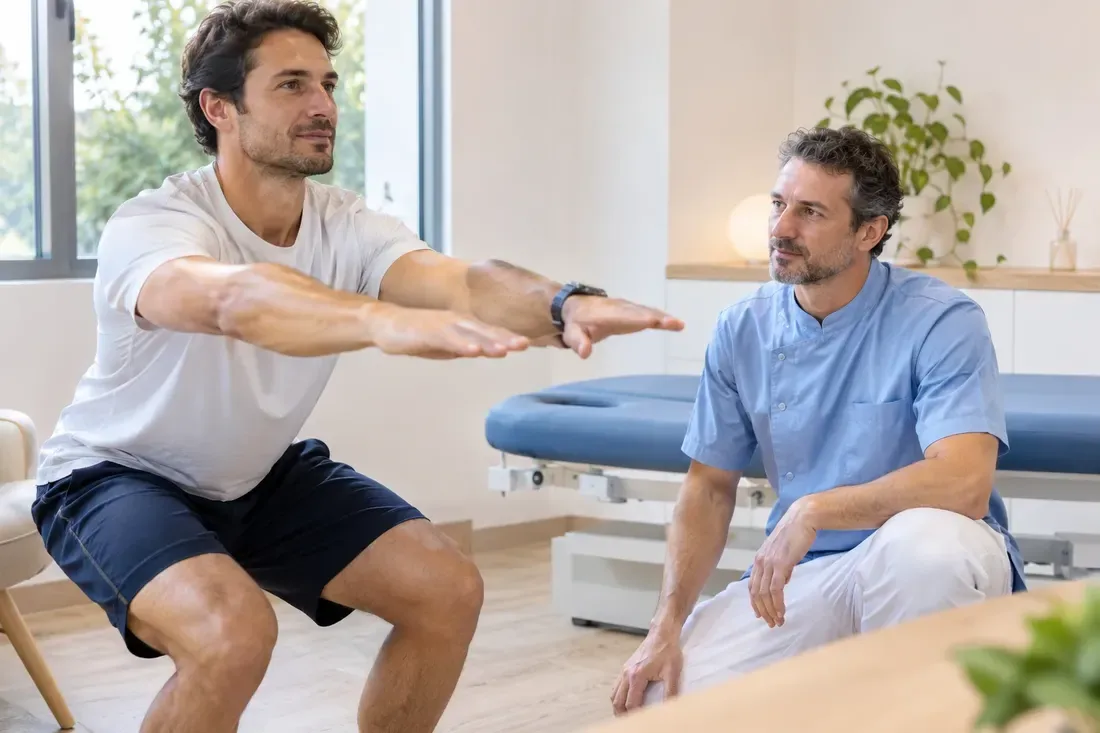
Describe your sport, last period sessions and changes in volume, intensity or equipment. Specify when the discomfort appears and how long it lasts after effort. The level of performance alone does not allow us to know whether pain can be continued without risk.
Associate review and progress plan
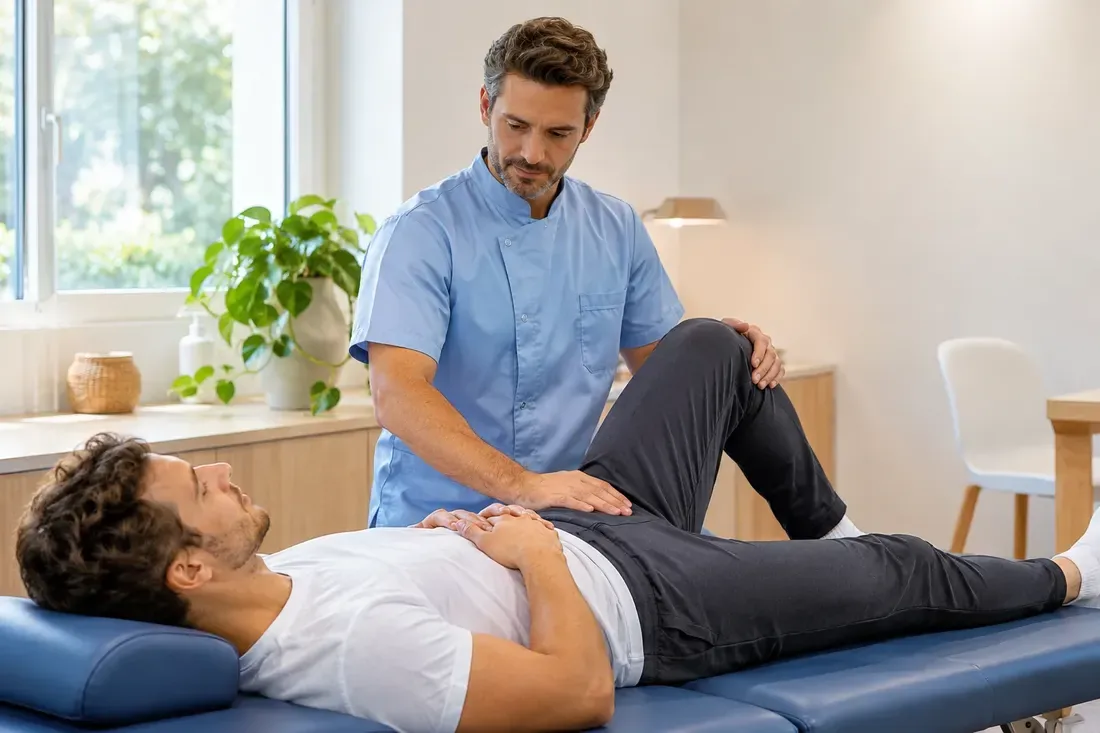
A consultation can help to analyze symptoms and constraints, with medical guidance if a lesion is suspected. Manual care may improve comfort in the short term; it does not guarantee performance gains or injury prevention. Rehabilitation and rehabilitation remain essential in many situations.
Choosing a recovery marker
Reduce one variable at a time and monitor the reaction the next day. An alternative activity is useful only if it remains suitable for injury and tolerance. Swelling, persistent lameness or pain that increases over the course of the sessions should lead to a review of the program rather than compensate for more passive care.
Sources and further reading
Documentary update: November 5, 2026. General information: The choice of care depends on your situation.

To deepen
Anatomy and scientific data
Discover the mechanisms, uncertainties and scope of recommendations for this topic.
Learn more →Understanding the method of reading evidence and the limits of advice →