Anatomy · Physiology · Research
Understanding discomfort after sport
Anatomical references, proposed mechanisms and analysis of scientific data.
On this page
Scientific dossier · Separate reading of practical advice
Functional and biomechanical anatomy
Muscles produce strength, tendons transmit it and joints organize movement. The ability of a tissue varies with previous training, recovery, age and other factors. The requirements of a race, jump or throw are not equivalent: the reasoning must be based on the sporting gesture concerned.
Physiology and mechanisms of symptoms
An increase in volume, intensity or frequency may temporarily exceed recovery capacity. This does not automatically identify the responsible tissue. Pain can also be associated with acute injury or medical problems; it is not limited to a bad technique or misalignment.
Clinical reasoning and guidance
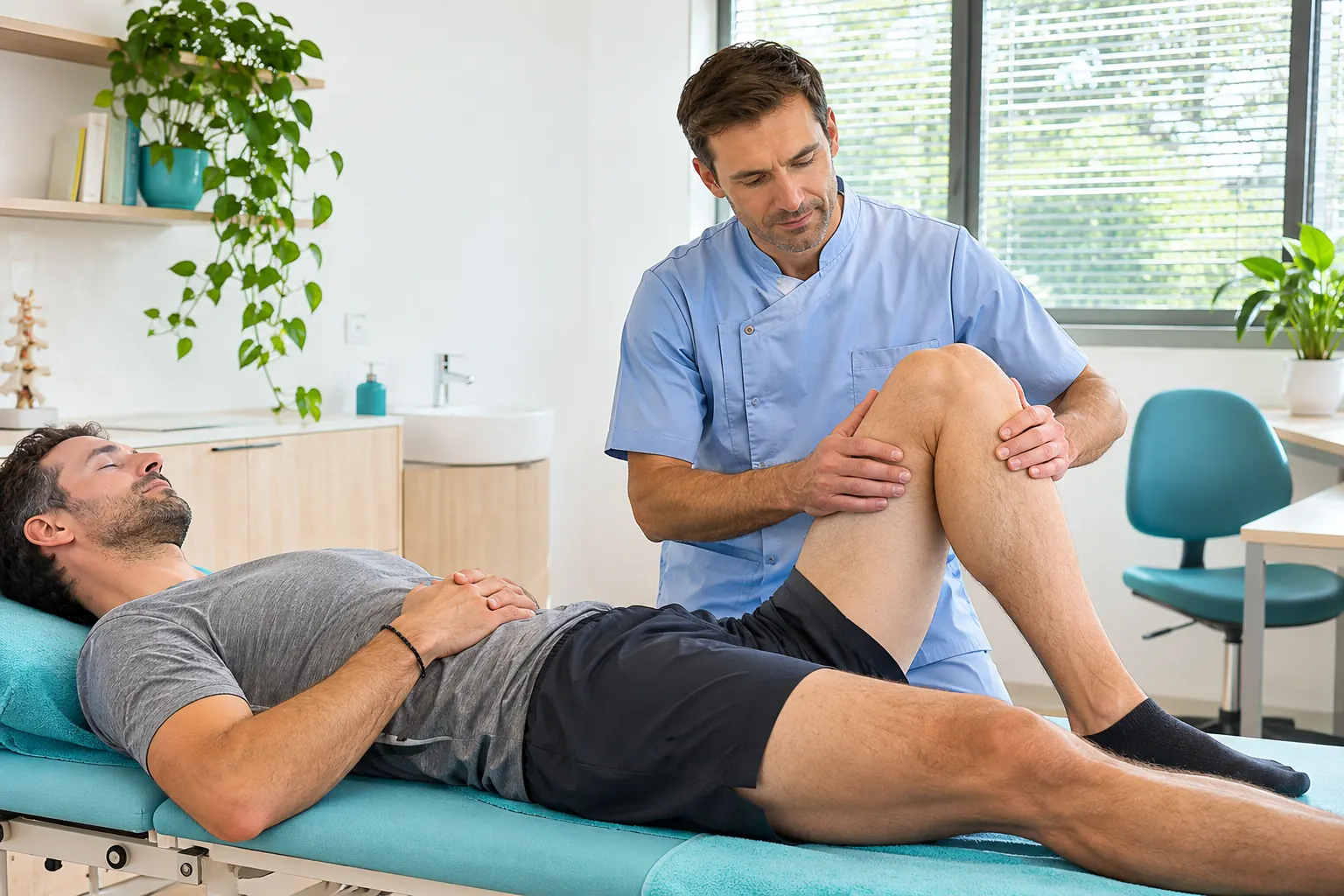
The assessment specifies the circumstances, the evolution during the effort and the response the next day. Trauma with functional incapacity, deficit or general symptoms requires appropriate orientation. Thoracic pain, malaise and unusual shortness of breath during exercise require a medical cause.

Scientific data and recommendations
Health recommendations support adapted physical activity and orthopaedic resources describe the path of soft tissue injury. They are not evidence that an osteopathic session improves performance or prevents injury. Diagnosis of injury conditions rehabilitation and recovery.
What the results do not support
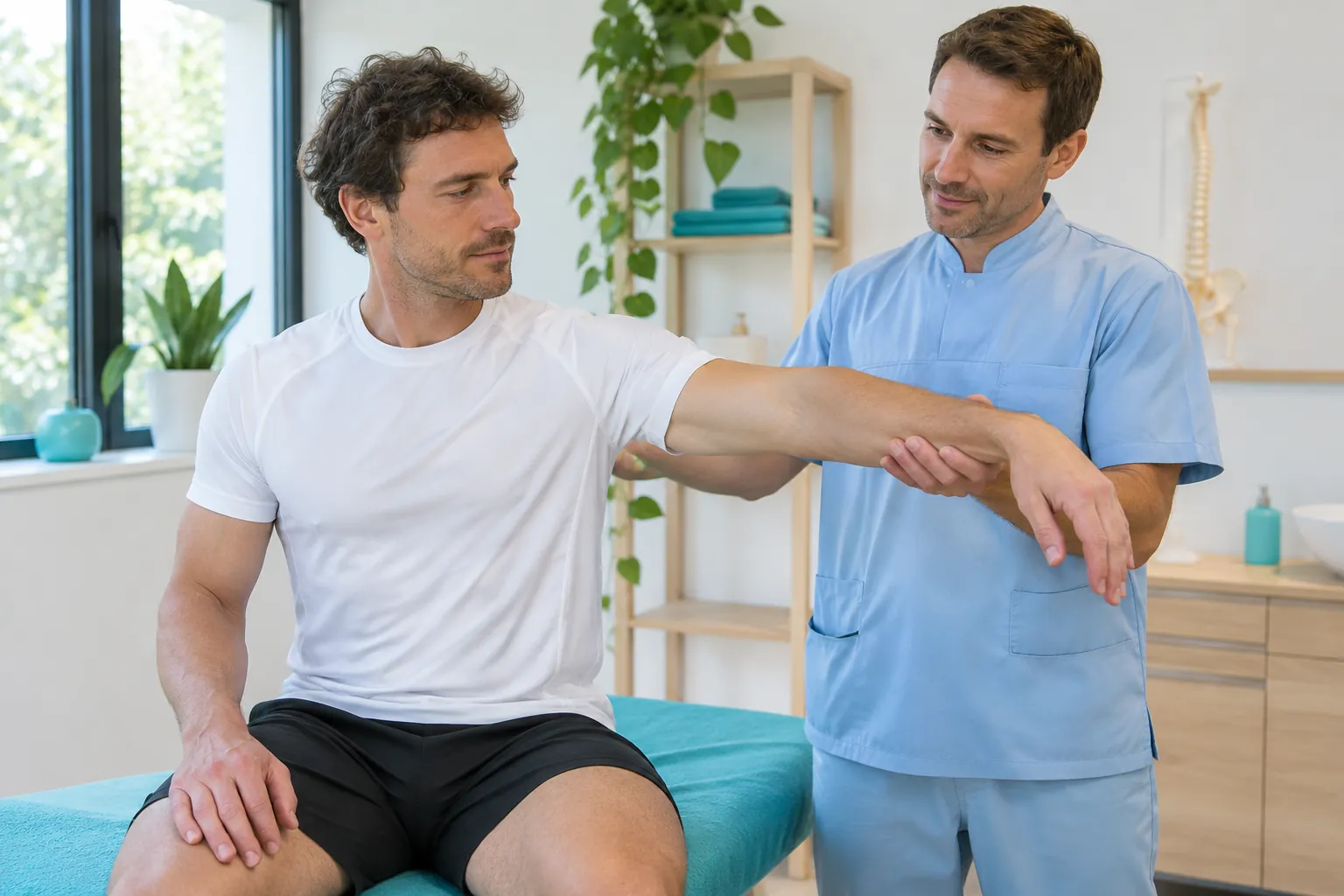
A different asymmetry or movement between two sides can be a variation rather than a pathological cause. The criteria for returning to sport must be linked to actual requirements, not just a post-treatment mobility measure. There is no universal weekly increase rule that guarantees the absence of recidivism.
Functional monitoring and coordination of care
Return combines tolerance to the load, confidence and ability to repeat the gesture. Symptoms during and after the sessions are discussed with the supervision and caregivers concerned. A persistent reaction or an unexplained decline in performance may justify a medical, nutritional or training reassessment.
Scope of this file
- Population and situation
- Sports problem: adjust the load and recovery. The results must be interpreted for this specific situation.
- Choice of care
- Health recommendations support adapted physical activity and orthopaedic resources describe the path of soft tissue injury.
- Security priority
- Chest pain, malaise, unusual shortness of breath, trauma with lack of support or neurological deficiency: stop the effort and get evaluated.
Fabric, function and load calendar
Sport-related pain may be more than the current ability, but also a lesion that requires diagnosis. The reasoning distinguishes a repeatedly solicited tendon, sprain and suspicion of bone injury. The loading schedule and the response after the sessions complete the examination. A rationale based solely on flexibility or visible alignment does not establish the level of risk.
From immediate action to return to activity
The amplitude or comfort gains observed after an intervention do not prejudge the ability to withstand a full session. The tests must describe the sport, level, exposure and injury, not just a test room result. The monitoring of the function and active progression provide a framework for possible care. A general promise of performance or injury prevention goes beyond the conclusions that can be drawn from these measures.
Bibliography and original documents
Editorial and documentary review: November 5, 2026. The references describe their scope; they are not valid for all osteopathic practices.