Anatomy · Physiology · Research
Understanding stiffness and mobility in older people
Anatomical references, proposed mechanisms and analysis of scientific data.
On this page
Scientific dossier · Separate reading of practical advice
Functional and biomechanical anatomy
Walking is based on the integration of strength, balance, vision, sensory information and neurological functions. Age-related changes are not uniform. Pain, illness, treatment or fear of falling can reduce activity and change travel strategies.
Physiology and mechanisms of symptoms
A decline in activity can reduce the functional reserve and make tasks more costly. However, the deconditioning circle is not a sufficient explanation for any recent difficulties. A medical cause, drug effect, visual disorder or environmental problem may require specific intervention.
Clinical reasoning and guidance
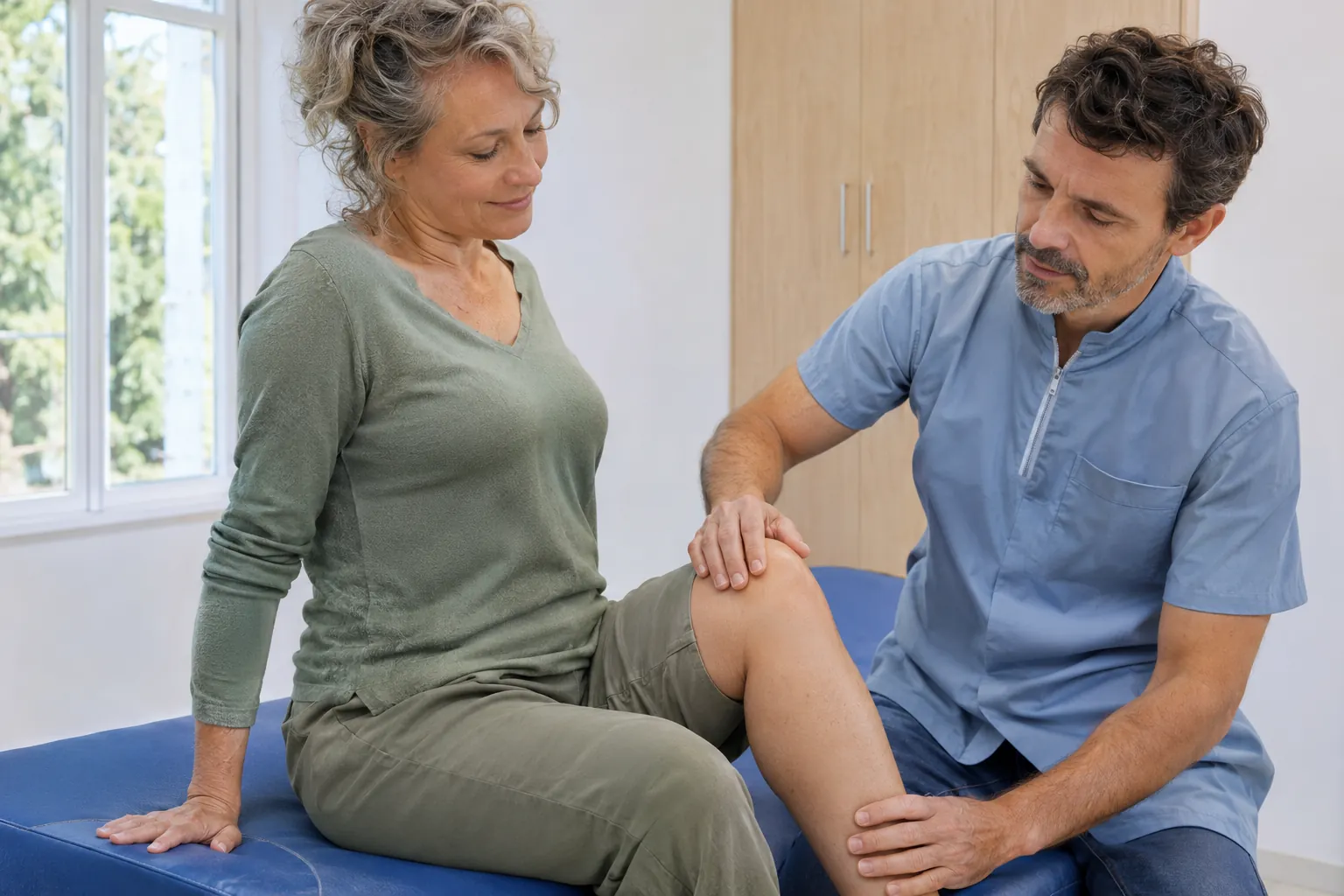
The evaluation is concerned with falls, malaise, recovery capacity and assistance used. The history of fracture, osteoporosis and anticoagulants alter the care precautions. A fall with a cranial shock or a new weakness must be assessed according to its severity, without waiting for a scheduled session.
Scientific data and recommendations
NICE NG249 offers assessment and prevention tailored to individual drop factors. Prevention programs are not limited to postural correction. The interest of comfort care should not be presented as evidence that it reduces the number of falls.

What the results do not support
A better balance during a short test does not in itself reduce the risk in everyday life. Measurements should be interpreted with the history of falls and function. Coordinated care can include strengthening, balancing work, medical review of treatments and accommodation adaptations.
Functional monitoring and coordination of care
The goals are chosen with the person: go out, wash, use the stairs or reach a loved one. Adapted technical assistance can increase autonomy. Follow-up takes into account fatigue, safety and preferences, avoiding preconditioning any activity for a pre-session session.
Scope of this file
- Population and situation
- Senior: preserve mobility and autonomy. The results must be interpreted for this specific situation.
- Choice of care
- NICE NG249 offers assessment and prevention tailored to individual drop factors.
- Security priority
- Fall with cranial shock, especially under anticoagulant, inability to rise, malaise or weakness new: ask for an urgent opinion.
Mobility and functional reserve
The autonomy depends on the strength, balance, sensory capabilities, cognition and possibilities offered by the environment. Joint pain can decrease activity, then contribute to a loss of capacity; the reasoning must consider this interaction without making it a single explanation. A rapid change of course or malaise requires a medical search for cause, beyond a known osteoarticular limitation.
Shared actions and decisions
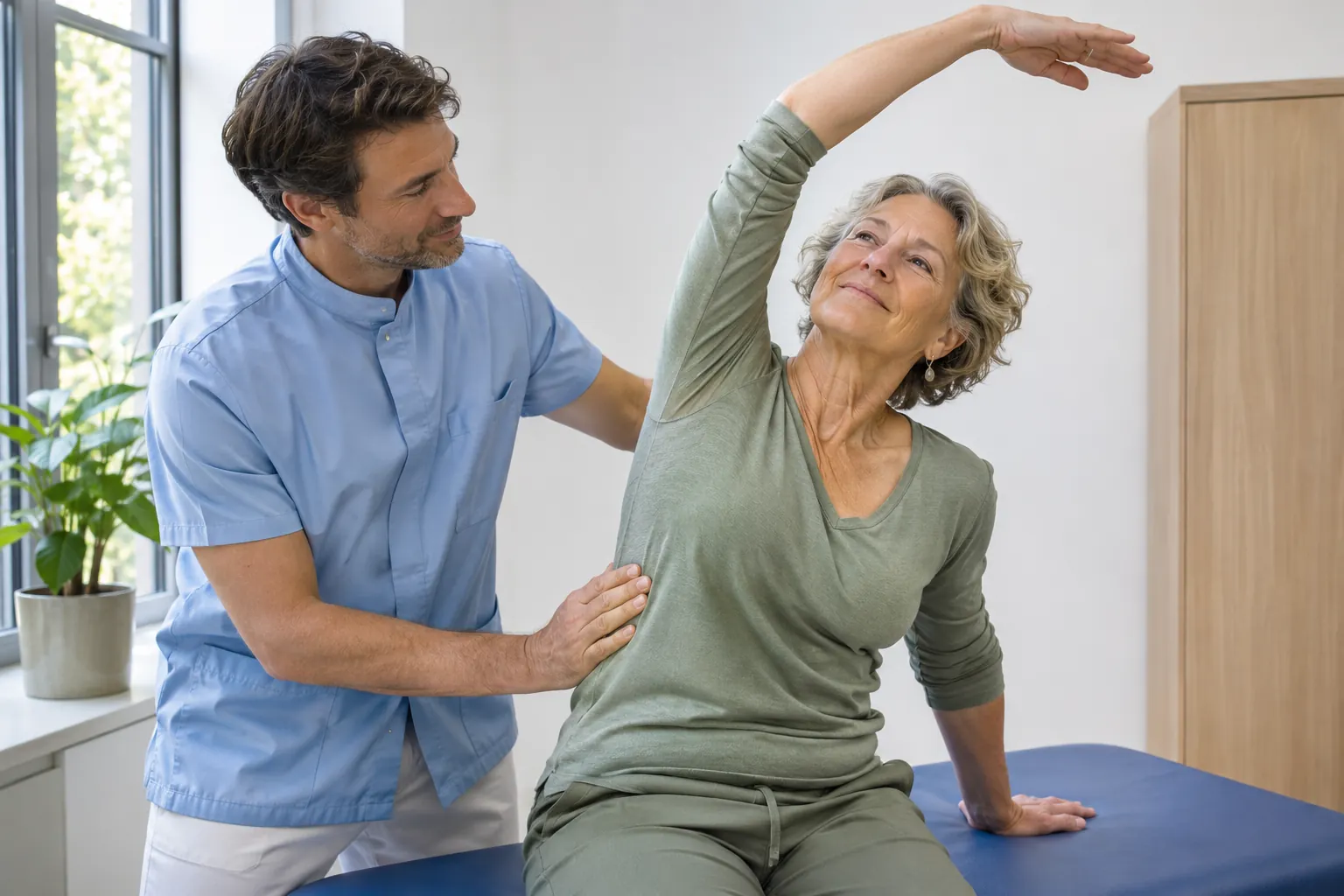
Follow-up may involve a priority activity such as getting up or out, with safety criteria. The recommendations on falls prevention do not support a single manual technique as an adequate program. There is a need to distinguish relief, improved mobility and real decline in falls, which require different criteria and durations of observation. Aids, exercises and other care are selected based on the individual's risks and objectives.
Bibliography and original documents
Editorial and documentary review: November 5, 2026. The references describe their scope; they are not valid for all osteopathic practices.