Understanding · Choosing · Acting
Older people: preserving mobility and independence
Do you hesitate more on the stairs or while travelling?
On this page
What you can observe
The discomfort can associate pain, decreased strength, fear of falling and difficulties of vision or balance. The assessment should consider these factors together, as well as medicines and the domestic environment.
The first landmarks in everyday life
Choose a realistic and regular activity, secure home trips and use the recommended aids. A fall, even without apparent injury, should be reported to the doctor.
Be part of important activities for you
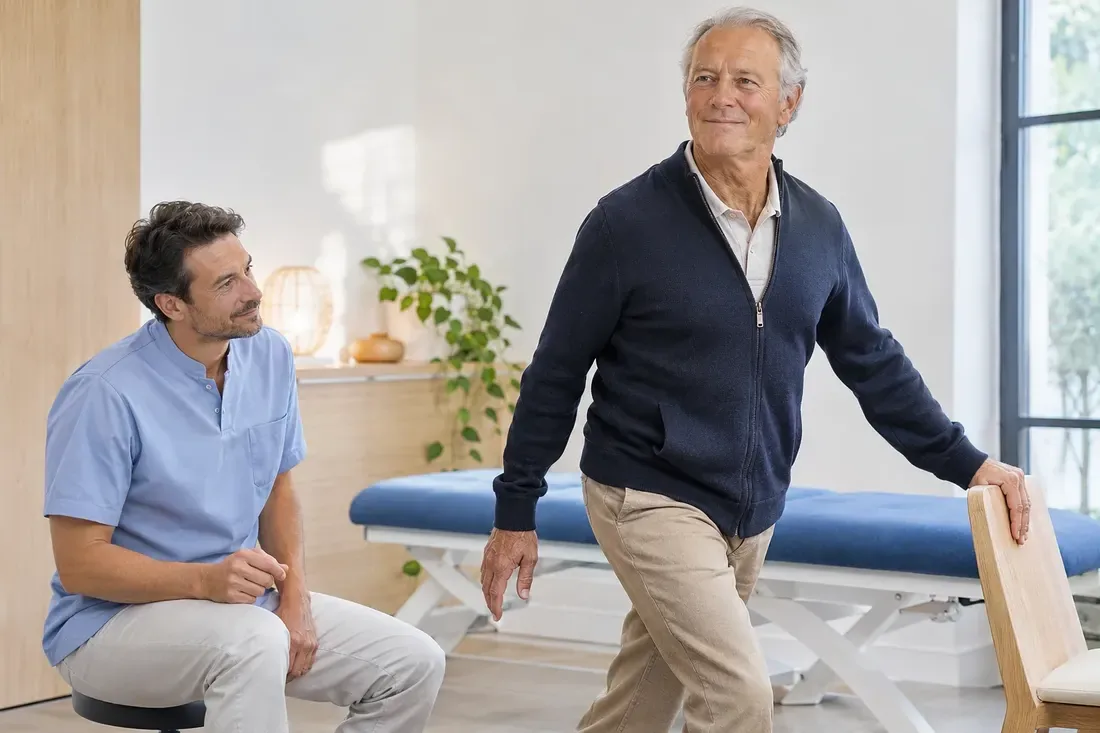
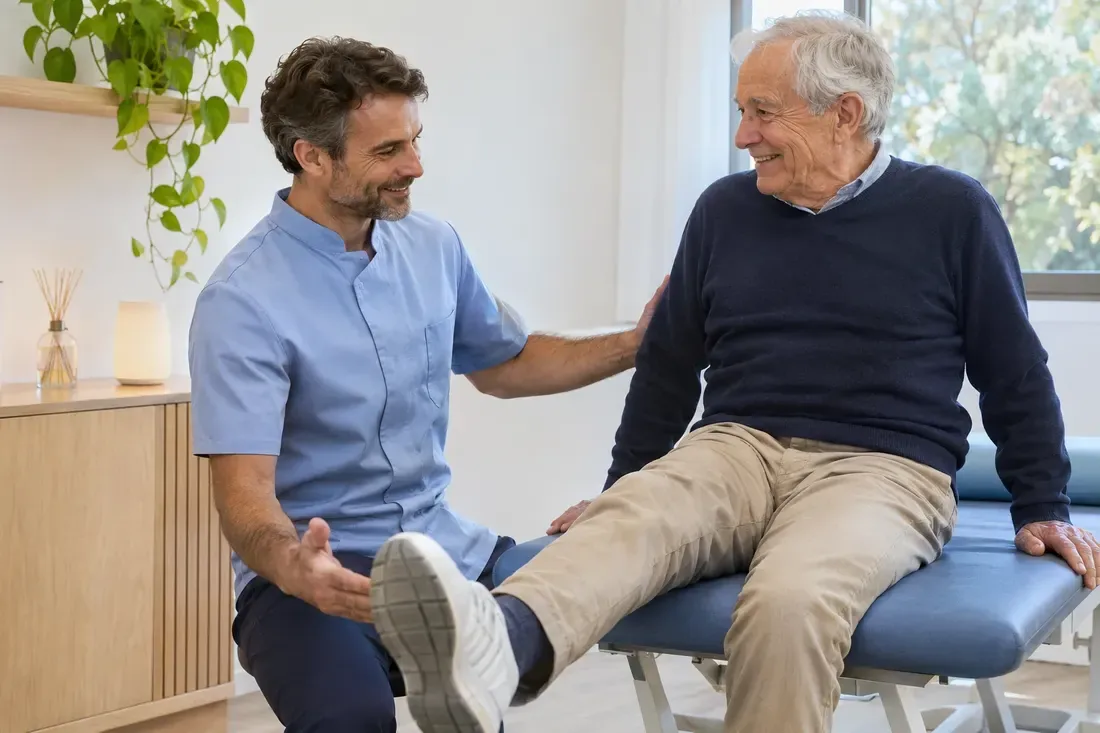
Walking to the shops, getting out of an armchair or going out with family are more useful goals than an ideal range of motion. Mention any falls, dizziness, medication or other treatment, and mobility aids already used. A recent decline in mobility can have several causes and needs to be understood before care is proposed.
Taking into account fragility
The examination and positions are adapted to fatigue, osteoporosis, history and preferences. Manual care remains complementary; it does not replace medical assessment, rehabilitation or environmental planning. The prevention of falls is based on several actions chosen according to the risks identified.
Safeguarding daily life
Keep clear passages, accessible lighting and useful objects at hand. A walking aid is arranged with a competent professional. To develop strength and balance, choose a suitable and accompanied program if necessary, especially after falling or in the event of instability.

Sources and further reading
Documentary update: November 5, 2026. General information: The choice of care depends on your situation.

To deepen
Anatomy and scientific data
Discover the mechanisms, uncertainties and scope of recommendations for this topic.
Learn more →Understanding the method of reading evidence and the limits of advice →