Understanding · Choosing · Acting
Knee pain: stairs, walking and bending
Going down a staircase, squatting or walking for a long time bothers you?

On this page
What you can observe
The knee reacts to the loads of the day as well as those of sport. The location, swelling and start circumstances guide the examination. An isolated and painless crack does not necessarily mean a lesion.
The first landmarks in everyday life
Temporarily modify the most irritating activities and maintain an appropriate activity. To resume, gradually increase one parameter at a time and observe the knee reaction the next day.
Identifying the circumstances
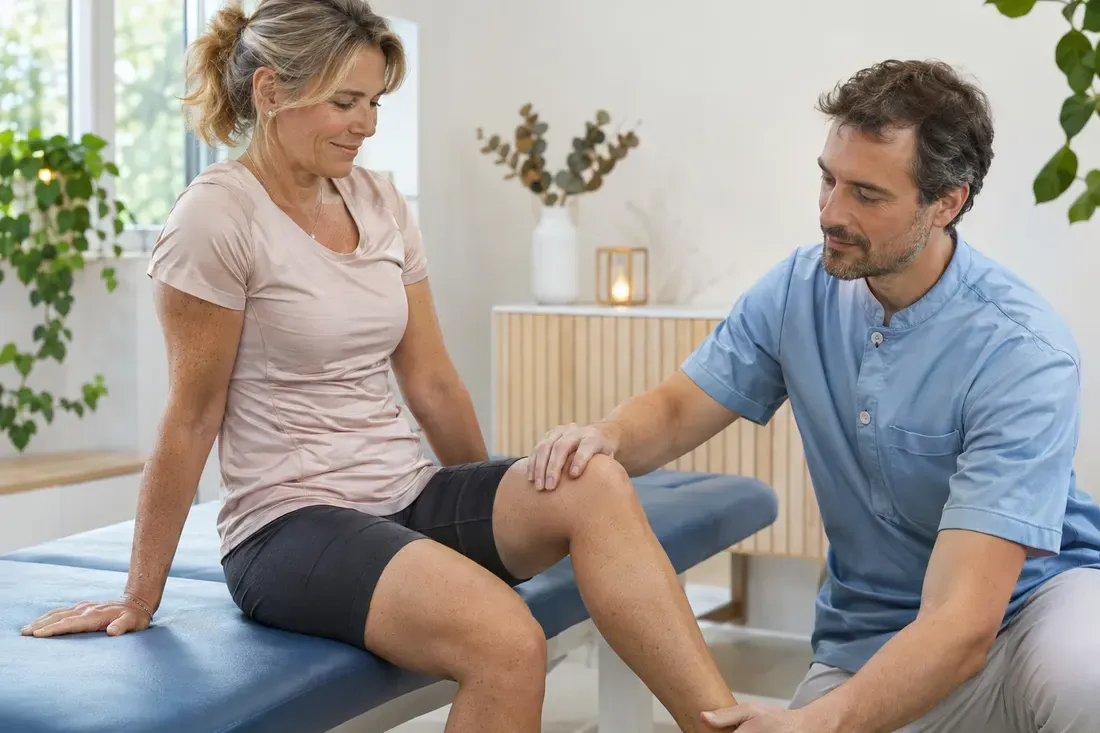
Indicate whether the knee hurts by going down stairs, running, rising or after twisting. Swelling, a real blockage or an impression of giving way are useful information. The noise of a joint alone does not measure the severity of a problem.
Defining a recovery strategy
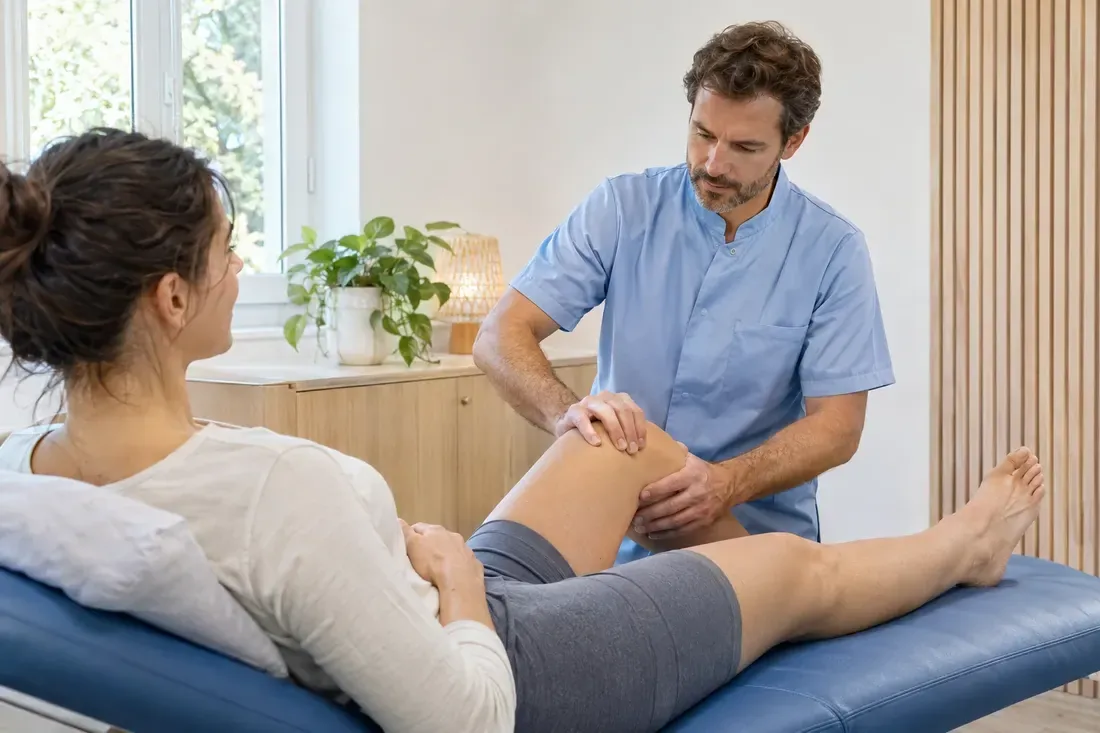
The examination looks for accessible functions and situations requiring a medical check-up. Manual techniques do not rebuild a ligament or a meniscus. For persistent pain or osteoarthritis, suitable active work and load management generally have more room than a succession of passive care.
Adapting Repeated Efforts
Temporarily reduce the duration or difficulty of the most difficult activities, then increase in stages. A mild and transient reaction does not have the same meaning as growing swelling or pain that prevents support. After a major shock or twist, do not test the knee by forced movements.
Sources and further reading
Documentary update: November 5, 2026. General information: The choice of care depends on your situation.

To deepen
Anatomy and scientific data
Discover the mechanisms, uncertainties and scope of recommendations for this topic.
Learn more →Understanding the method of reading evidence and the limits of advice →