These benchmarks are general. They complete an exchange with the professionals who follow you and do not replace a diagnosis or an individualized program.
Benchmark 01
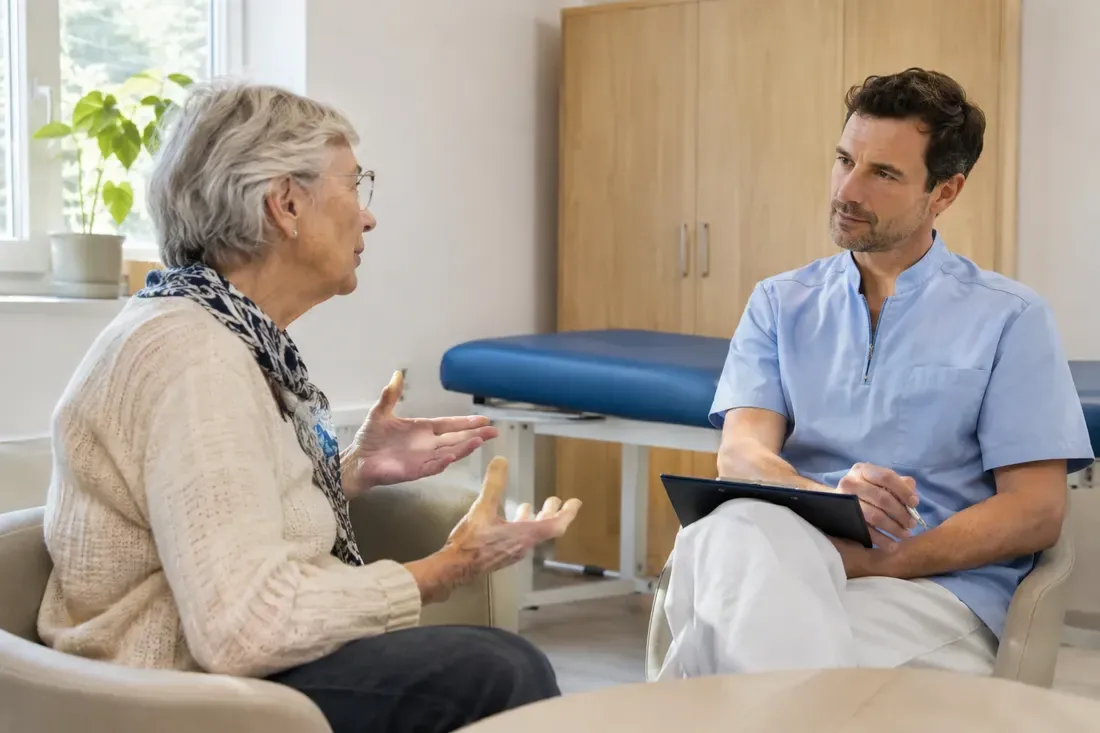
Choose an activity that matters to you
What gesture would you like to make easier: get up from an armchair, go out for a race, ride a few steps or garden? A concrete objective helps to choose an activity and assess progress.
Aerobic activity, strengthening and balance have complementary roles. Walking remains useful, but does not replace all other solicitations. Share opportunities to move within the week and start with sequences compatible with your fatigue, treatment and health.
Benchmark 02
Preparing a safe practice space
Clear the area, ensure proper lighting and keep fixed support accessible, such as a solid work plan. A lightweight or slip-like chair does not offer the same safety. Wear suitable shoes and choose a time when you feel good.
If you have already fallen, are stunned or are afraid to lose balance, be accompanied to begin. Progressive videos can help to re-examine an exercise; they alone do not allow you to assess your risk. Do not start with a challenge with your eyes closed or without support.
Bench 03
Gradually resume the gestures of force
Rising from a chair, climbing on the tip of the feet with support or moving a light load are examples of tasks that require muscles. Choose a variant that you can control. A higher chair or the help of armrests can make a first test more accessible.
Start with few repetitions, breathe during the movement and leave a suitable recovery. Increase gradually if the practice remains tolerated. If you have a disease, recent operation or significant pain, ask what variants are appropriate before building your routine.
Benchmark 04
Working Balance with Accessible Support
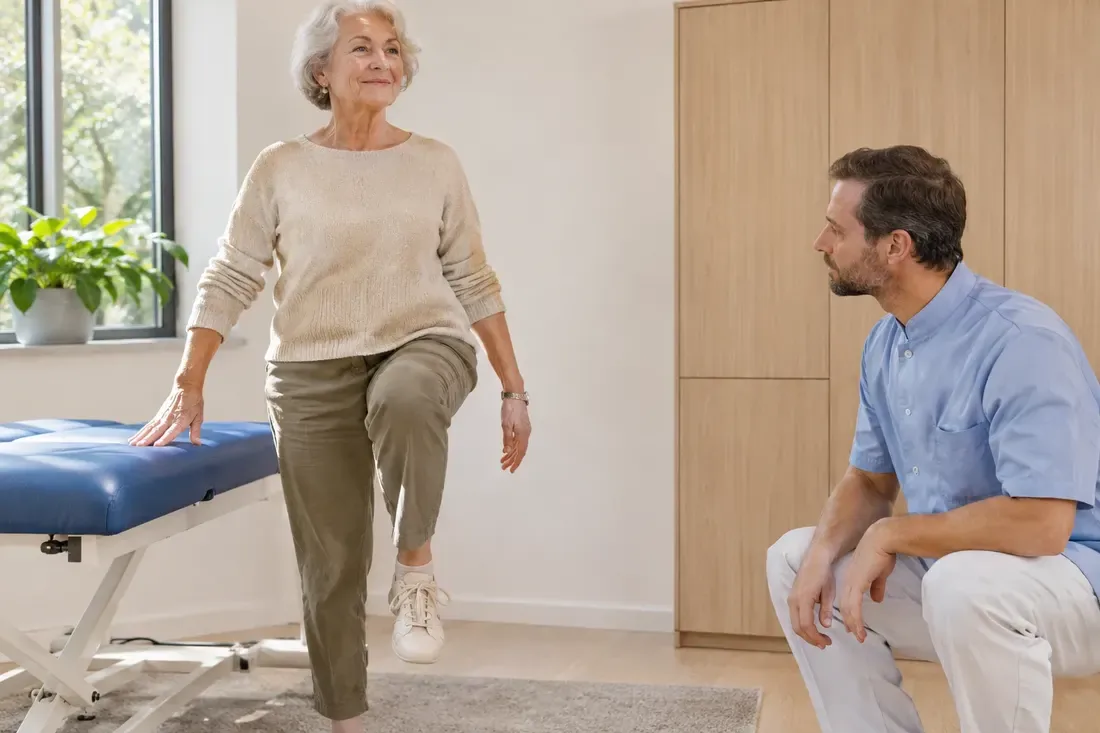
NHS resources include lateral steps, walking with close feet or small walking climbs. The difficulty can be adjusted by the length of the step, speed and support used. The quality of control is more important than the search for a spectacular position.
Keep support within range, even when you feel more confident. Regular and progressive practice is preferable to occasional difficult testing. If an exercise triggers dizziness, unusual pain or feeling sick, stop and ask for advice before resuming it.
Bench 05
Observe situations where a fall may occur
Take a walk around the home thinking about real travel: you get up at night, join the bathroom, wear laundry or use stairs. Identify cables, mobile carpets, ground objects and poorly lit areas. Reorganize common objects to limit height searches or crowded journeys.
Bathroom aids and handrails must be adapted and properly fixed. If you need a cane or other help, have its setting and use checked.
Bench 06
After a fall, look for several possible factors
A fall is not always due to a simple awkwardness or stiffness. The doctor may be interested in vision, symptoms, medications and circumstances. Note where, when, what you were doing, and if you have lost consciousness or felt discomfort.
Bring a list of your treatments, including non-prescription products. Don't stop them alone. A review can also address bone health and support needs. If the fear of falling causes you to give up exits, signal it: this impact deserves help, even without a new fall.
A first step
A short session organized
Example of organization to adapt to your situation, without performance objective.
- Clear the space and check for stable support.
- Choose a gesture of force already adapted to your situation.
- Add a simple balance exercise with accessible support.
- Finish before exhaustion, then note your comfort and recovery.
Traps to avoid
- Start alone with a difficult balance after a recent fall.
- Press an unstable chair or practice in a crowded area.
- Stopping a medicine on your own initiative because it could cause dizziness.
When can I ask for an opinion?
After a fall, severe hip pain, impossibility of support, head shock including anticoagulant, loss of consciousness or new neurological disorder require urgent assessment. Repeated falls or new vertigo require a medical check-up, even without apparent injury.
Your questions
Is walking enough to maintain balance?
The walk contributes to the activity, but exercises of strength and balance bring additional stresses. Their level must be adapted.
Do I have to practice without holding the support to progress?
No. Support is a way to adjust the difficulty. Security remains a priority; you can make progress while maintaining accessible support.
Should we consult after a fall without injury?
A check-up is useful if falls are repeated, malaise is possible or you have changed your activities out of fear. The circumstances guide the assessment.
The documentary selection
See, read, deepen
Illustrated movements to adapt, with safe support if necessary.
www.mangerbouger.frRecommendation · EnglishNHS — Physical Activity of SeniorsBenchmarks for combining activity, strength and balance.
www.nhs.ukGuide / resource · EnglishNHS — Equilibrium exercises illustratedExamples with photographs and support available.
www.nhs.ukVideo/Demonstration · EnglishNHS Inform — Strength and Balance VideosProgressive videos organized in three levels.
www.nhsinform.scotGuide / resource · EnglishCDC—Preventing FallsMedical factors, vision and home layout.
www.cdc.govRecommendation · EnglishCDC — Physical activity after 65 yearsComplementarity of aerobic, force and balance activities.
www.cdc.gov